GENETICS × TECHNOLOGY
The Human Genome
2001 to 2022 CE
Phanerozoic · Cenozoic · Quaternary · Holocene · Meghalayan
The human genome, three billion letters long, was read in draft in 2001 and declared finished in 2003 with eight per cent still missing, and the last gaps were filled only in 2022.
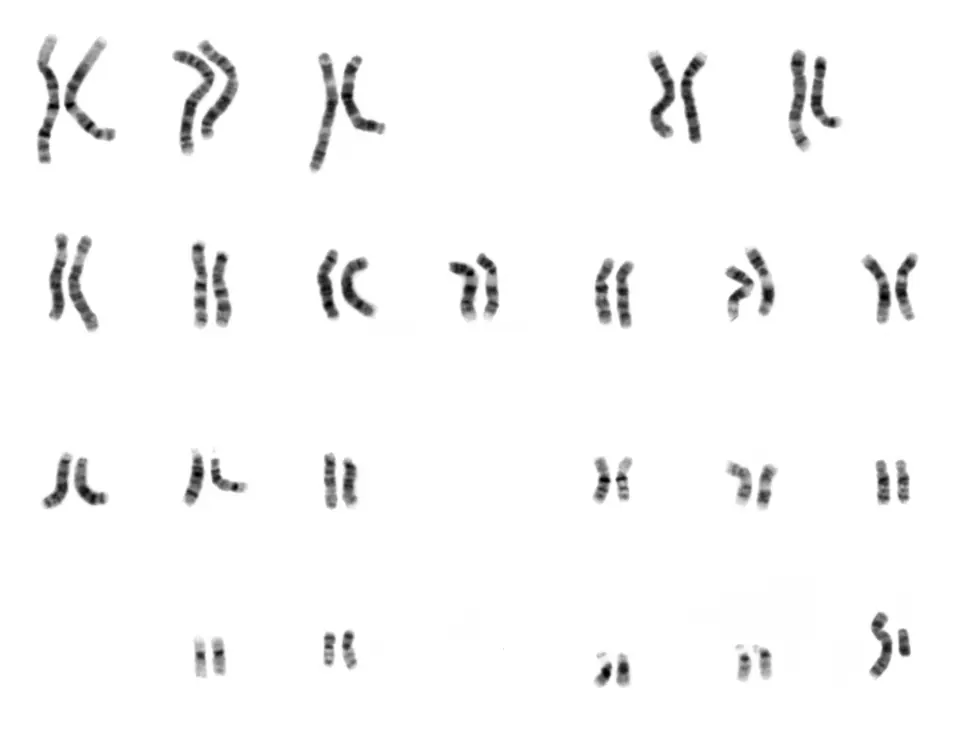
The human genome is the complete DNA sequence of a human being, three billion letters long. A public consortium and a private company, competing with one another, first read it in draft, and it was declared finished in 2003. Eight per cent was still missing, in long stretches of repeated sequence. Short reads, the small pieces of DNA read one at a time, could not span them: a repeat looks identical wherever a short read lands within it, so the reads could not be put in order. Spanning the repeats required long-read sequencing, which reads large pieces whole. The genome is divided into chromosomes, separate molecules of DNA. The last gaps were closed in 2022 on every chromosome except the Y, the chromosome carried by males.
Why it matters
With the human genome read, the difference between it and any other genome became a measurable quantity. Accounts of the project ordinarily omit the nineteen additional years that followed the declared completion. The easy ninety-two per cent required a decade, and the difficult eight per cent required two decades.
Dating & uncertainty
The entry gives two dates, the year of the first drafts and the year the last gaps were filled. Two drafts were published in 2001, a public one by the International Human Genome Sequencing Consortium and a private one by Venter and colleagues. The project was declared complete in 2003. Nurk and colleagues filled the missing eight per cent in 2022, on every chromosome except the Y.
Earth history as one day
23:59:59.9995476 µs before midnight
if Earth’s 4.54 billion years were compressed into a single day