TECHNOLOGY × EXTINCTIONS
The Eradication of Smallpox
1980 CE
Phanerozoic · Cenozoic · Quaternary · Holocene · Meghalayan
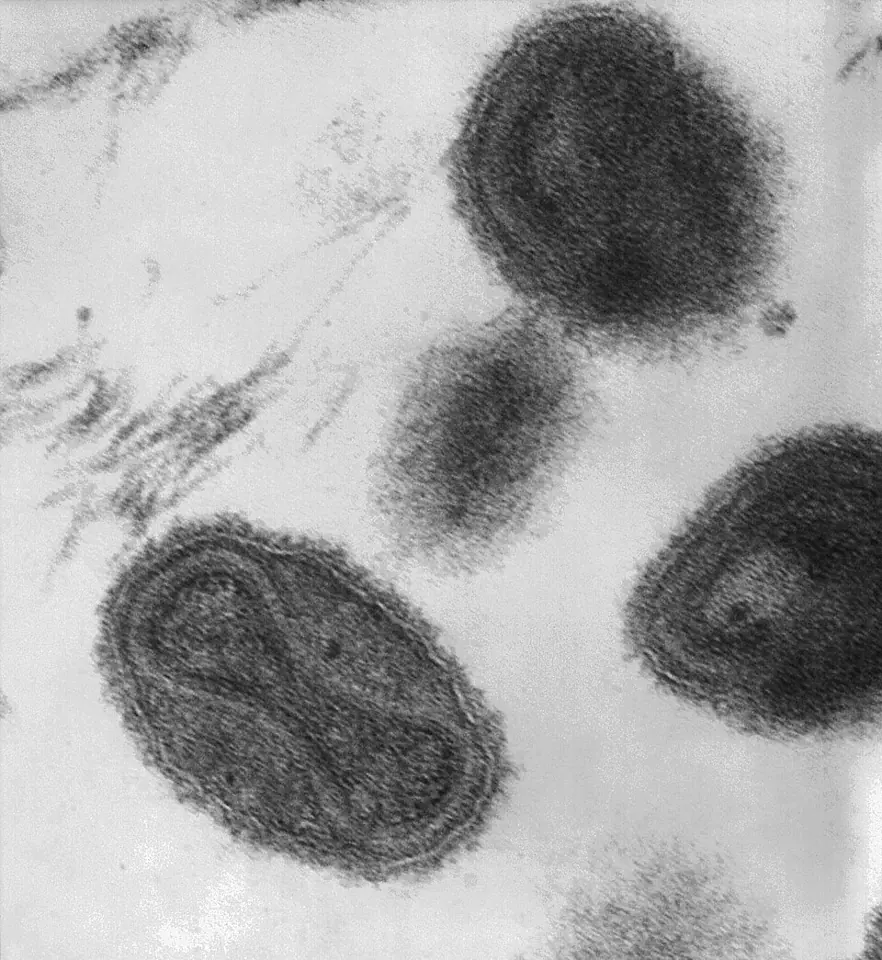
Smallpox, a viral disease declared eradicated in 1980, was eliminated by ring vaccination, in which teams located each remaining outbreak and vaccinated the people around it.
The eradication of smallpox is the elimination of a viral disease from the whole world by a strategy called ring vaccination. Teams located each remaining outbreak and vaccinated the contacts, the people who had been near the sick. Household by household, the virus then found no susceptible people, that is, people able to catch it. Smallpox was eliminated by this strategy and not by immunising a whole population. The last natural case occurred in Somalia in 1977. Certifying the eradication required two further years of searching for transmission that had already ceased, because the absence of the disease had to be demonstrated.
Why it matters
The disappearance of smallpox is the only extinction on this timeline that people sought, planned and carried out. Ring vaccination shows that a disease can be stopped where it is present, without stopping it everywhere at once. The task is then much smaller, and this allowed the eradication to be completed where general vaccination alone had not completed it.
Dating & uncertainty
The last natural case was in October 1977. After the two years of searching required to establish that transmission had ceased everywhere, the global commission responsible for certification concluded in December 1979 that eradication had been achieved. The World Health Assembly, the governing body of the World Health Organization, endorsed that conclusion in 1980, and this endorsement is the year displayed.
Earth history as one day
23:59:59.9991875 µs before midnight
if Earth’s 4.54 billion years were compressed into a single day