GENETICS × TECHNOLOGY
CRISPR Genome Editing
2012 CE
Phanerozoic · Cenozoic · Quaternary · Holocene · Meghalayan
CRISPR genome editing is a tool that cuts DNA at a chosen sequence, built in 2012 from the memory of past viral attacks that bacteria keep in their genome.
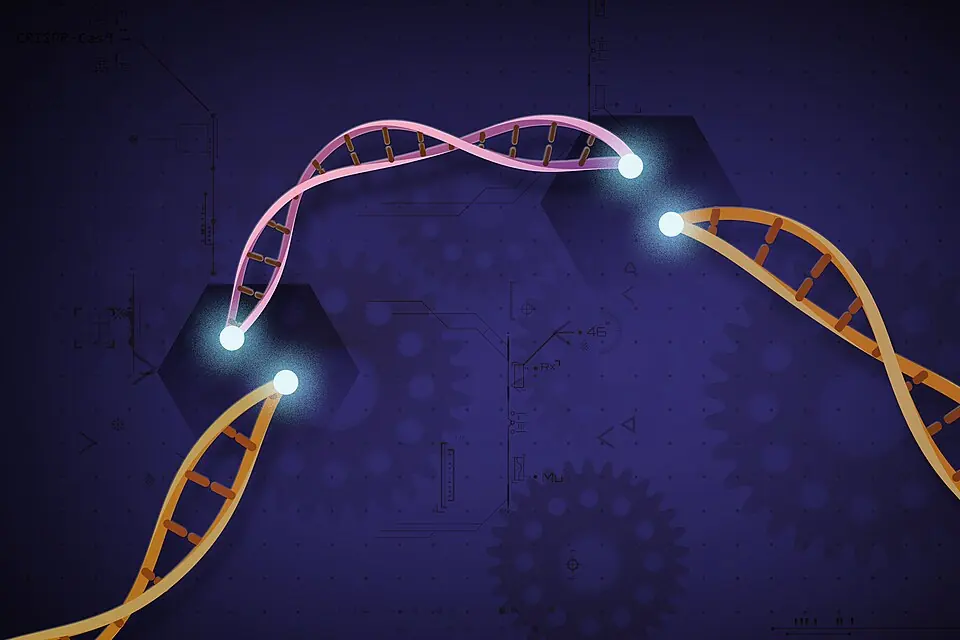
CRISPR genome editing is a method for modifying DNA that borrows a mechanism from bacteria. Bacteria keep in their genome fragments of the viruses that have attacked them, and use those fragments to recognise a later attack. This arrangement is described as bacterial adaptive immunity. To turn it into a tool, researchers supply the recognition sequence themselves, as a guide RNA. RNA is a molecule related to DNA, and the guide is composed to pair with the targeted DNA segment. The guide RNA brings an enzyme, Cas9, to that segment, and Cas9 cuts the DNA there. Jinek and colleagues demonstrated the method in 2012. Within a year it was working in human cells.
Why it matters
The human species can now rewrite genomes deliberately, including its own, as a routine operation. CRISPR spread where earlier methods failed to spread because changing the target means changing a short fragment of RNA, and not designing a new protein. The targeting is written rather than constructed.
Earth history as one day
23:59:59.9997266 µs before midnight
if Earth’s 4.54 billion years were compressed into a single day