GENETICS × HUMAN EVOLUTION
Ancient DNA
1984 to 2010 CE
Phanerozoic · Cenozoic · Quaternary · Holocene · Meghalayan
Ancient DNA is DNA that survives in bone for tens of thousands of years as short damaged fragments, and between 1984 and 2010 researchers learned to use that damage as the mark of a genuinely ancient sequence.
Ancient DNA is DNA recovered from long-dead organisms. It survives in bone and skin for tens of thousands of years, but it is recovered as short fragments. The ends of the fragments are chemically altered in a characteristic way: cytosine, one of the four letters of DNA, is progressively converted to uracil, a letter that DNA does not normally contain. For a time this damage made results unreliable, because a stray modern strand yields a cleaner sequence than a genuine ancient one and could be mistaken for it. Researchers then made the damage their criterion. A sequence that shows no post-mortem damage pattern, the alterations that build up after death, is not accepted as ancient. A draft Neanderthal genome followed in 2010.
Why it matters
Extinct species can now be studied through their own DNA. Much of what is known on this timeline about Neanderthals and Denisovans, two extinct human groups, about the Black Death and about the first dogs was read in ancient DNA rather than inferred from bones.
Dating & uncertainty
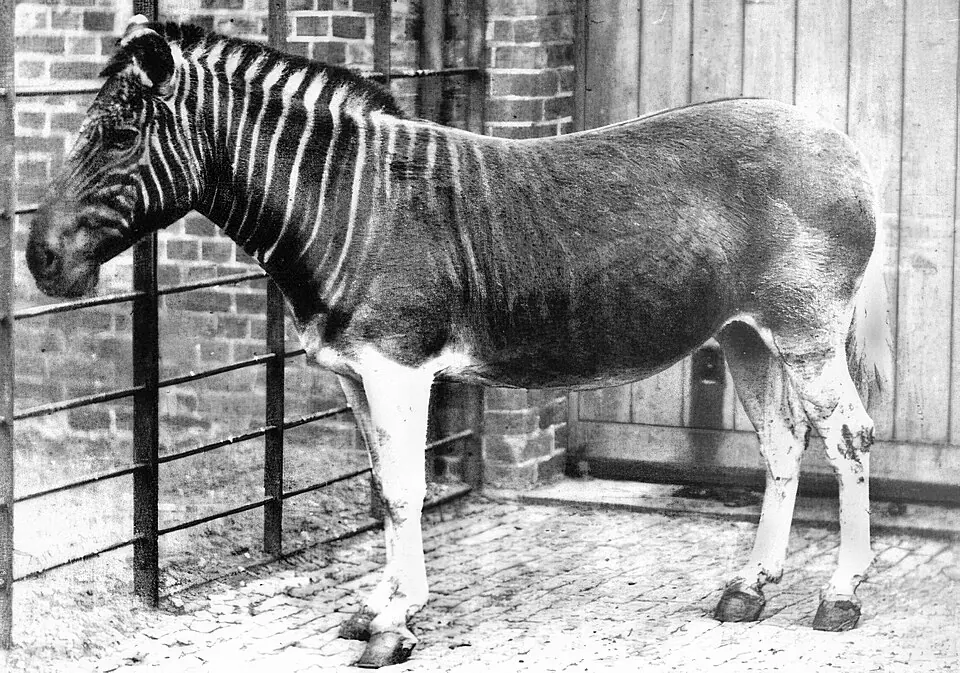
The interval runs from 1984 to 2010. In 1984 Higuchi and colleagues obtained the first sequences of an extinct animal, the quagga, a member of the horse family, from dried muscle on a museum specimen. The draft Neanderthal genome of Green and colleagues dates from 2010. The entry gives an interval because the early work was not yet reliable. Between the two dates researchers gained the ability to distinguish a genuinely ancient sequence from a modern one.
Earth history as one day
23:59:59.9992799 µs before midnight
if Earth’s 4.54 billion years were compressed into a single day