ANTHROPOCENE × TECHNOLOGY
The Anthropocene: an Epoch Refused
2024 CE
Phanerozoic · Cenozoic · Quaternary · Holocene · Meghalayan
Geologists voted in 2024 against making the Anthropocene, the time of human impact on the planet, a formal epoch of geological time, because the stratigraphic procedure demands a single marker in the rock and a single start date.
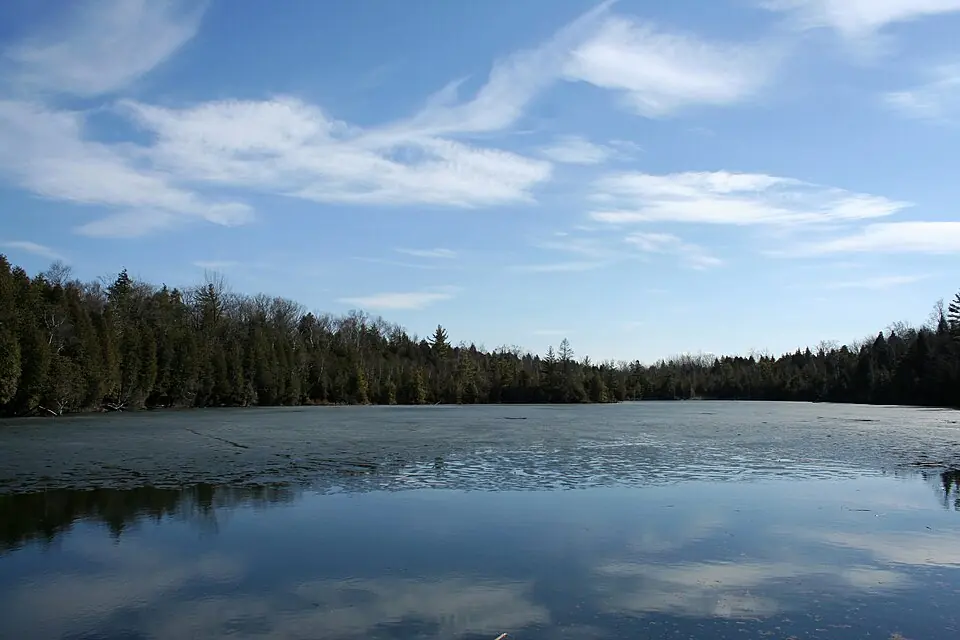
The Anthropocene is a proposed geological epoch, a division of geological time, defined by human impact on the planet. Geologists voted against establishing it as a formal epoch. The refusal concerns the requirements of the stratigraphic procedure, not the scale of human impact. Stratigraphy divides geological time from the layers of rock, and its procedure demands a single agreed marker in the rock and a single start date. The proposal placed the boundary, the start of the epoch, at 1952 in the sediment of Crawford Lake, in Canada, and used the plutonium of nuclear weapons testing as its marker. It did not convince the geologists who voted. The vote was challenged on procedural grounds and upheld.
Why it matters
The last division on this timeline is one that geologists declined to draw. An epoch must have a defined beginning, as a chapter has a first page. The transformation of a planet by a species over two centuries has no such beginning. The Anthropocene remains real and in use, and it is unofficial.
Dating & uncertainty
The date 2024 is that of a decision, not of a boundary in rock. The proposal was to make the Anthropocene an epoch beginning in 1952, with a Canadian lake as its reference point. The stratigraphic body responsible for such decisions rejected the proposal in March 2024. The rejection was challenged on procedural grounds and stood.
Earth history as one day
23:59:59.000038 µs before midnight
if Earth’s 4.54 billion years were compressed into a single day