CLIMATE × TECHNOLOGY
The EPICA Dome C Ice Core
2004 CE
Phanerozoic · Cenozoic · Quaternary · Holocene · Meghalayan
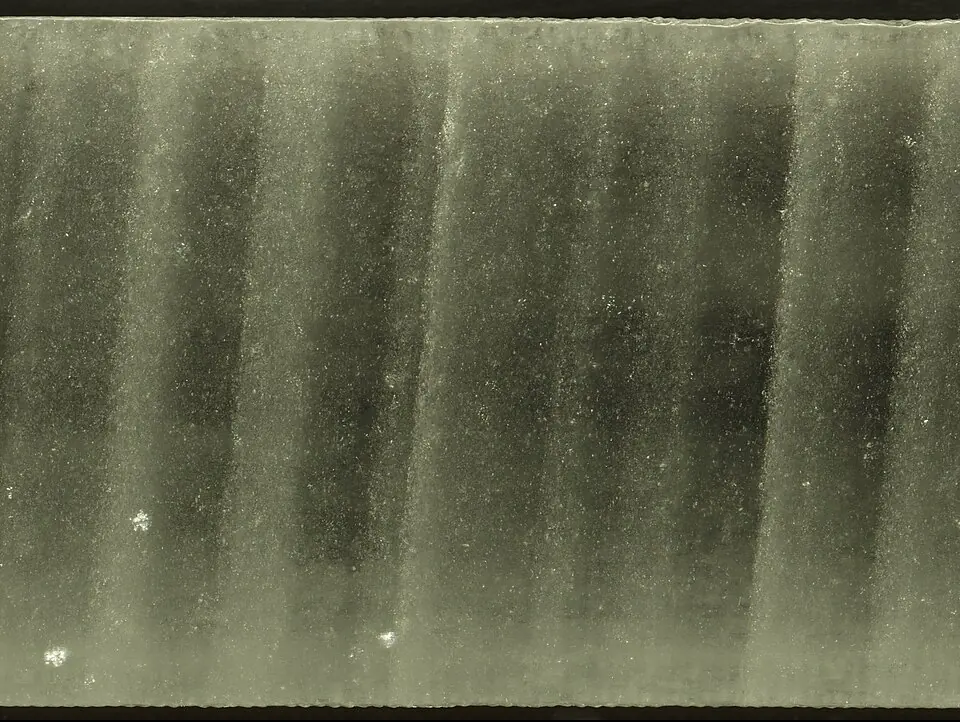
The EPICA Dome C ice core, three kilometres of Antarctic ice read layer by layer since 2004, contains bubbles of ancient air sealed as the snow compacted, and gives past temperature and carbon dioxide side by side.
The EPICA Dome C ice core is a column of Antarctic ice three kilometres long, drilled out and read layer by layer. The ice contains bubbles of ancient atmosphere. The bubbles were sealed when the snow burying them compacted and closed. The layer in which that closure occurs is called the firn. The core gives temperature and carbon dioxide from the same depth, so the two can be compared directly instead of being matched between separate archives, the natural records of past climate. It does so across eight glacial cycles, each an alternation of a cold period and a warmer one.
Why it matters
Ice cores are the only category of archive in which the air of the past is measured instead of being inferred. The present carbon dioxide concentration can therefore be compared with eight hundred thousand years of directly sampled air, and not with an estimate. No value in those eight hundred thousand years approaches the present concentration, which makes it an anomaly.
Dating & uncertainty
The EPICA Dome C core reaches back 800,000 years, which is eight glacial cycles. Older ice survives in places, and drilling is under way to reach it. The continuous record stops at 800,000 years.
Earth history as one day
23:59:59.9996419 µs before midnight
if Earth’s 4.54 billion years were compressed into a single day