HUMAN EVOLUTION × GENETICS
Neanderthals
~430,000 to 40,000 years ago
Phanerozoic · Cenozoic · Quaternary · Pleistocene · Chibanian
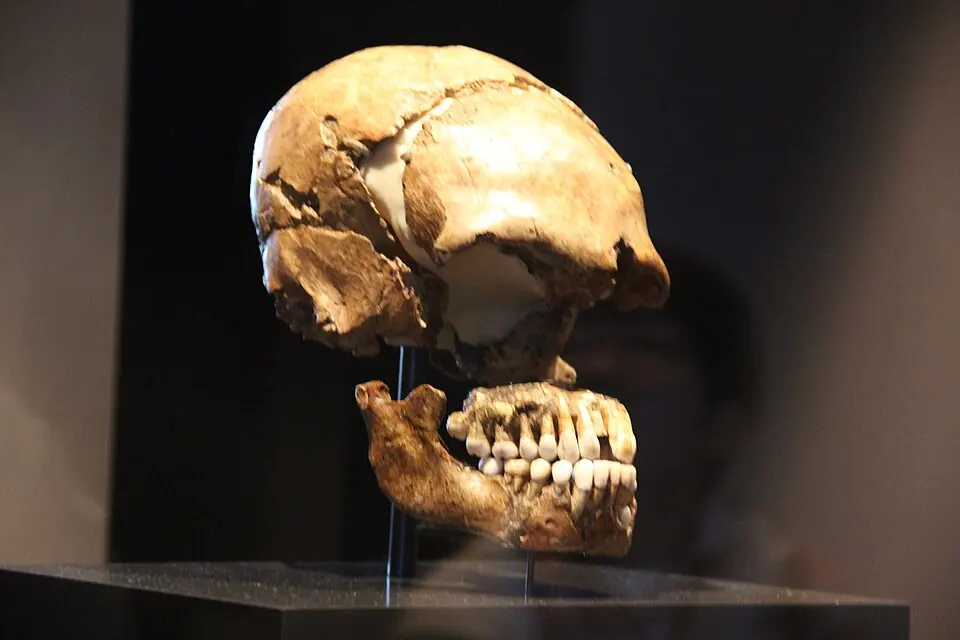
Neanderthals were a human lineage that lived in Europe and western Asia from about 430,000 to 40,000 years ago, in small populations isolated from one another, and a sister lineage of our own, descended from the same ancestors.
Neanderthals were a human lineage of Europe and western Asia that lived through the glacial periods in small populations isolated from one another. They are a sister lineage of our own. Researchers have sequenced the Neanderthal genome, that is, read the order of its DNA, from Siberian and European bone. Iasi and colleagues (2024) compared it with more than three hundred human genomes of the last fifty millennia. Neanderthal genes entered the populations of our own lineage by introgression, the durable incorporation of genes from one population into another. The comparison places this introgression in a single prolonged period of contact, between 50,500 and 43,500 years ago. That period accounts for the great majority of the Neanderthal DNA carried by present-day populations.
Why it matters
Neanderthals are the closest example of another way of being human. Most populations outside Africa carry one to two per cent of Neanderthal DNA. Natural selection sorted this DNA rapidly: within a few thousand years of the contact between the two lineages, it had already removed some Neanderthal variants, that is, Neanderthal versions of genes, and spread others.
Dating & uncertainty
The hominins of the Sima de los Huesos lived about 430,000 years ago and already belong to the Neanderthal lineage. Hominins are humans and their extinct relatives. The last securely dated Neanderthal sites are between 41,000 and 39,000 years old. These two limits of the Neanderthal period both depend on dating methods that are regularly revised.
Earth history as one day
23:59:518.2 s before midnight
if Earth’s 4.54 billion years were compressed into a single day