HUMAN EVOLUTION × GENETICS
The Black Death
1347 to 1352 CE
Phanerozoic · Cenozoic · Quaternary · Holocene · Meghalayan
The Black Death, the plague pandemic of 1347 to 1352, killed something like half the population of Europe in five years, and researchers later reconstructed the genome of its bacterium from the teeth of its victims.
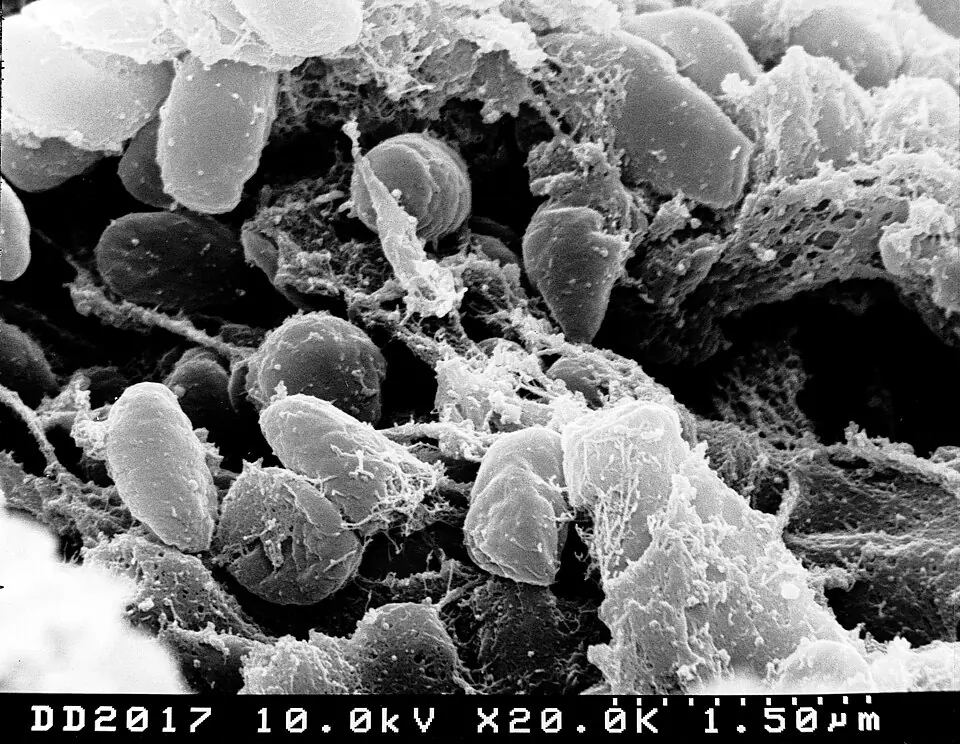
The Black Death is the pandemic of plague, caused by the bacterium Yersinia pestis, that killed something like half the population of Europe in five years. Seven centuries later, Bos and colleagues (2011) reconstructed the genome of the bacterium, its complete DNA, from victims buried in a London plague pit, a mass grave. They took the DNA from dental pulp, the soft tissue inside a tooth, which best preserves blood-borne pathogens, the disease-causing microbes carried in the blood. The closest known ancestor of that bacterium was recovered from a cemetery in the Tian Shan mountains, the region from which the pandemic appears to have come.
Why it matters
The Black Death was the first pandemic whose agent, the microbe that causes it, researchers identified from the remains of its victims rather than inferred from written descriptions. They recovered the genome of the pathogen itself. Researchers have since applied the method to earlier epidemics. Keller and colleagues (2019) used it to establish the presence of the sixth-century plague in the British Isles, where the written sources were too ambiguous to settle the question.
Dating & uncertainty
The dates come from written sources. Ancient DNA, the DNA recovered from old remains, identifies the agent: researchers sequenced Yersinia pestis, that is, read its DNA, from the teeth of London victims. Ancient DNA also places the origin of the pandemic in central Eurasia in the early fourteenth century.
Earth history as one day
23:59:59.9913 ms before midnight
if Earth’s 4.54 billion years were compressed into a single day