HUMAN EVOLUTION × GENETICS
The Denisovans
~300,000 to 50,000 years ago
Phanerozoic · Cenozoic · Quaternary · Pleistocene · Chibanian
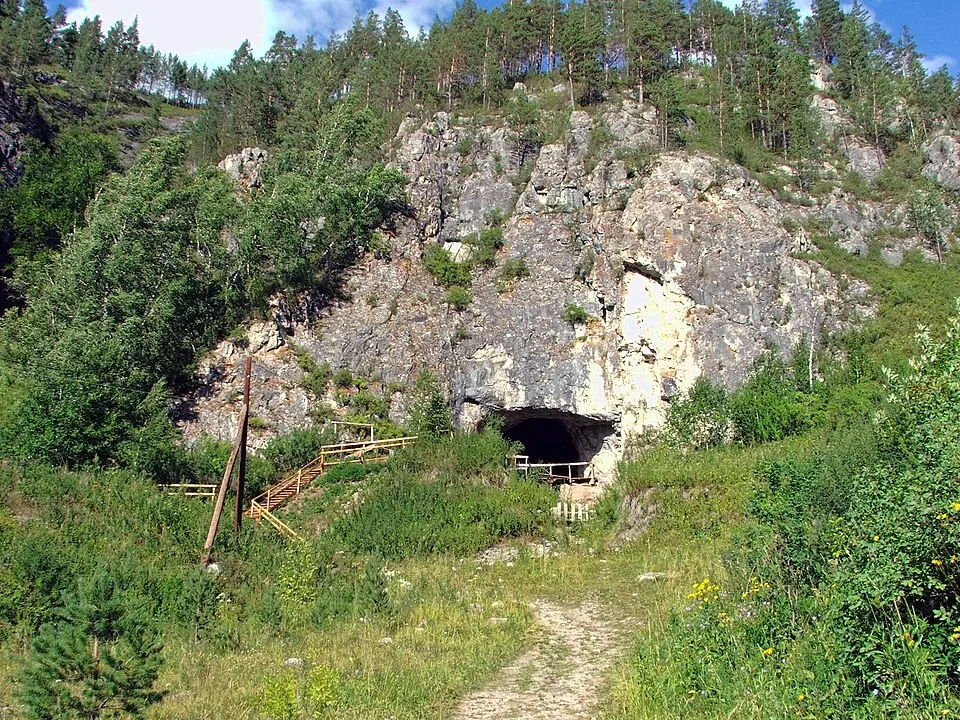
The Denisovans are a human population that researchers defined from a genome, read from a single finger bone found in Denisova cave, in Siberia, and not from a skeleton.
The Denisovans are a human population known mainly from its DNA. Reich and colleagues (2010) read a genome from a single finger bone found in Denisova cave, in Siberia, and this genome belonged to no named group. Few bodily remains are known: a jaw, some teeth and fragments of skull. The jaw comes from Tibet and contained no DNA. It was identified by palaeoproteomics, the analysis of surviving proteins. Nearly everything else known about the Denisovans comes from the DNA they left in living people. This DNA shows at least three separate encounters between the ancestors of living people and Denisovans, each with a distinct Denisovan population. These three populations were probably distributed far beyond Siberia and adapted to different environments.
Why it matters
The Denisovans are the first human population discovered by sequencing, the reading of DNA, and not by excavation. Their DNA still works in living people. The Denisovans transmitted a version of one gene to the populations of Tibet, and it allows them to live in good health at altitudes at which other populations fall ill.
Dating & uncertainty
Jacobs and colleagues (2019) date the occupation of Denisova cave by the Denisovans from about 300,000 to 50,000 years ago. The area where the Denisovans lived is known principally from the DNA carried by present-day populations. This DNA indicates that Denisovans lived far beyond Siberia, and it suggests that they survived late in the islands of South-East Asia.
Earth history as one day
23:59:545.7 s before midnight
if Earth’s 4.54 billion years were compressed into a single day