LIFE × EVOLUTION
Onychonycteris: Flight Before Sonar
~52 million years ago
Phanerozoic · Cenozoic · Paleogene · Eocene
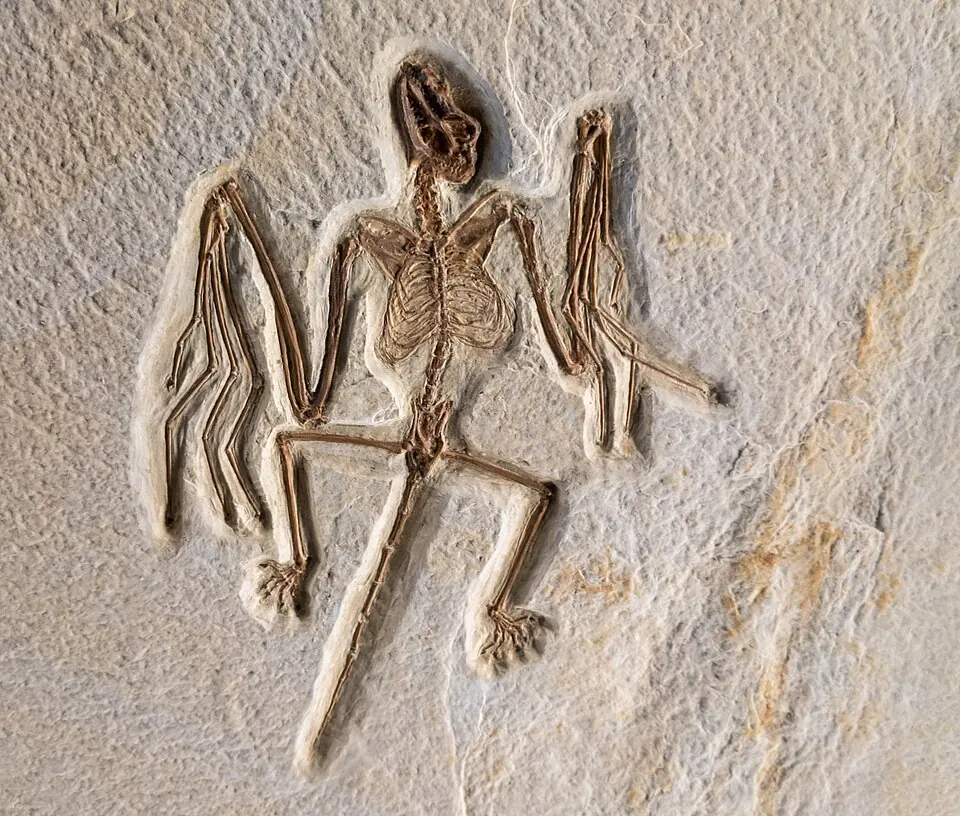
Onychonycteris, a bat of about 52 million years ago, had complete wings and an inner ear too small to process echoes, so that it flew without sonar.
Onychonycteris is a bat of the Eocene, a geological epoch. Its wing was already complete: a membrane stretched between elongated fingers, each of which bore a claw. Its inner ear was too small to have processed the echoes of its own calls. Onychonycteris therefore lacked echolocation, the sonar of bats, which is the location of objects by emitting sounds and interpreting their return. The close relatives of Onychonycteris in the same epoch hunted by listening for prey rather than by emitting sound. In this lineage, flight therefore came before echolocation.
Why it matters
Bats are the fourth and last animal group in which powered flight appeared, meaning flight driven by beating wings. Two abilities define bats, flight and echolocation. Until the discovery of Onychonycteris, fossil bones gave little indication of which of the two abilities bats acquired first.
Dating & uncertainty
The fossil of Onychonycteris, 52 million years old and found in Wyoming, has fully formed wings and an inner ear too small for echolocation, which argues that flight came first. This sequence remains debated. In competing hypotheses, echolocation appears before the wing or at the same time as the wing.
Earth history as one day
23:43:3016 min 30 s before midnight
if Earth’s 4.54 billion years were compressed into a single day