CLIMATE × LIFE
The Azolla Event
~49 to 48 million years ago
Phanerozoic · Cenozoic · Paleogene · Eocene
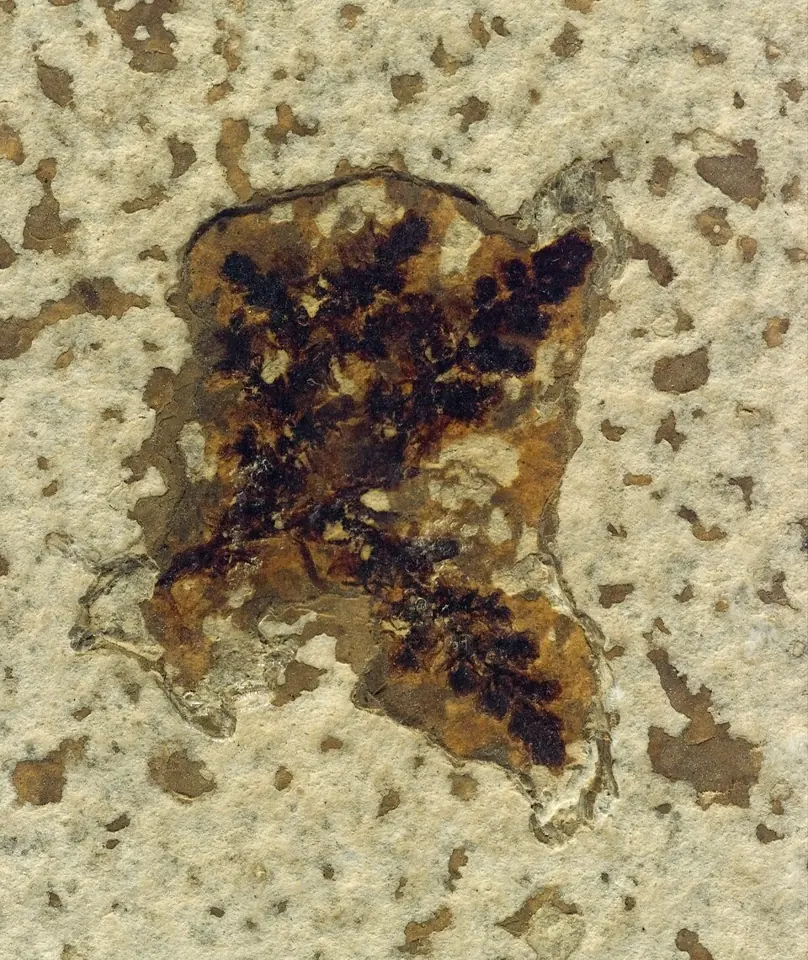
Azolla, a floating fern, grew, died and sank in quantity in the Arctic Ocean for about a million years, around 49 million years ago, when the surface water was fresh enough for it.
The Azolla event is an interval of about a million years in which Azolla, a floating fern, grew at the surface of the Arctic Ocean. The surface water was then fresh enough, meaning low enough in salt, for the fern to live there. Azolla doubles its mass in a few days and is among the fastest-growing plants alive. The fern grew, died and sank into water containing no oxygen, where it could not decay. The carbon it had taken from the air therefore stayed buried instead of returning to the air. Grown today under high carbon dioxide, the same fern grows markedly faster. The atmosphere of the Eocene, the geological epoch of the event, would therefore have promoted this bloom, a mass growth of the plant, rather than limited it.
Why it matters
The Azolla event falls at the time when the greenhouse world, a warm climate without permanent ice, shows its first signs of tipping towards the present glacial regime, a climate with ice at the poles. A floating aquatic plant is therefore a possible factor in the transition that led to the present climate. Whether the fern was a cause or an incidental phenomenon depends on the quantity of carbon dioxide that its burial removed from the air. No one can measure this quantity directly, and the published estimates differ by nearly a factor of ten.
Dating & uncertainty
The fern layers in the Arctic sea-floor cores, cylinders of drilled sediment, are unambiguous. The quantity of carbon dioxide their burial removed is a flux calculation, drawn from estimated flows of carbon, not a measurement. The estimates range from 55 to 470 parts per million, a measure of its concentration in the air. The effects of these blooms on the global carbon cycle, the exchange of carbon between air, sea and rock, remain largely unknown.
Earth history as one day
23:44:2715 min 33 s before midnight
if Earth’s 4.54 billion years were compressed into a single day