EVOLUTION × LIFE
The Origin of Whales
~50 to 38 million years ago
Phanerozoic · Cenozoic · Paleogene · Eocene
Whales descend from small hoofed land mammals, in a transition to life in water that took place between 50 and 38 million years ago, and Indohyus, the closest known relative of whales, already had ear bones built like theirs.
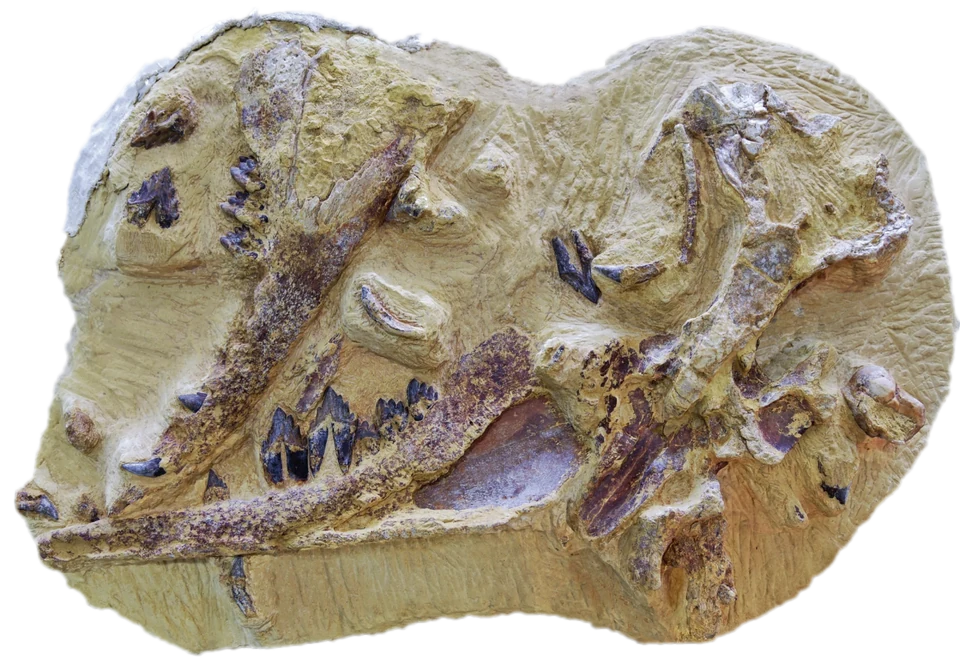
Cetaceans are the whales, dolphins and porpoises, and they descend from small hoofed land mammals. Their closest known relative outside the group is Indohyus, a cat-sized wader, meaning an animal that walks in shallow water. The ear bones of Indohyus are built as a whale's are. Its limb bones are unusually dense, a condition called pachyosteosclerosis. In animals that spend their time in water, such dense bones act as ballast, a weight that keeps the body down. Within about twelve million years the lineage had produced fully aquatic animals whose hind limbs were reduced to stubs.
Why it matters
The origin of whales is one of the best documented major transitions known from fossils. It runs in the opposite direction to the emergence of vertebrates from water: a land vertebrate returned to the water its ancestors had left. The fossils show that the ear, the limb bones and the diet all changed, and that the first of these changes was under way while the animal still walked.
Dating & uncertainty
The transition from land to water is documented by a series of fossils from India, Pakistan and Egypt, dated from about 50 to 38 million years ago. The sites are dated with unequal precision. The twelve million years are therefore outer limits and not a measured duration of the transition. The earliest steps are known from ears, teeth and limb bones rather than from complete skeletons.
Earth history as one day
23:44:0815 min 52 s before midnight
if Earth’s 4.54 billion years were compressed into a single day