CLIMATE × EARTH
The Palaeocene-Eocene Thermal Maximum
~56 million years ago
Phanerozoic · Cenozoic · Paleogene · Eocene
The Palaeocene-Eocene Thermal Maximum is a warming that followed the entry of more than ten thousand billion tonnes of carbon into the ocean and the atmosphere within a few thousand years, about 56 million years ago.
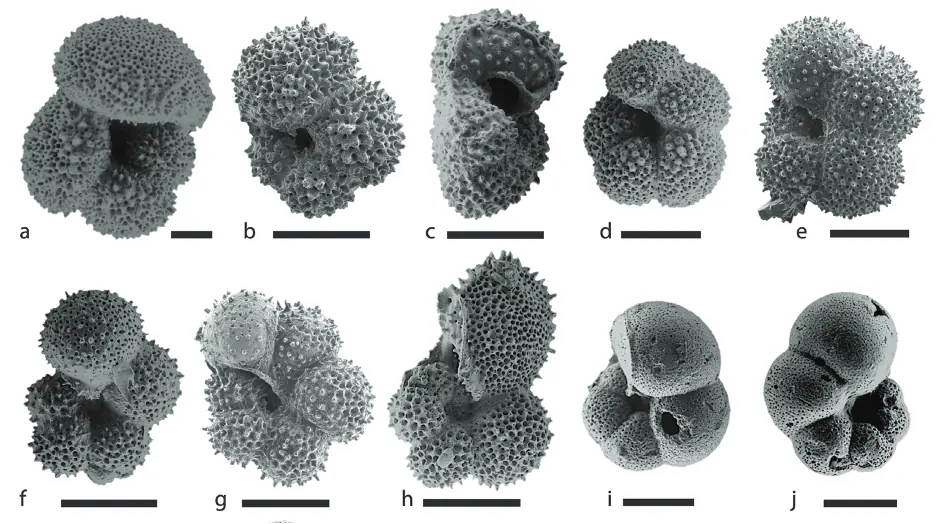
The Palaeocene-Eocene Thermal Maximum, abbreviated PETM, is a warm interval that followed a rapid release of carbon, at the boundary between two geological epochs, the Palaeocene and the Eocene. More than ten thousand billion tonnes of carbon entered the ocean and the atmosphere over a few thousand years. Researchers measure boron, a chemical element, in fossil shells. These measurements show that the sea surface acidified throughout and identify the source of the carbon: volcanism along the North Atlantic, which was then opening. Methane frozen in seafloor sediments was long held responsible instead. Temperature rose about five degrees. Benthic foraminifera, single-celled organisms with shells that live on the deep-sea floor, suffered their most severe extinction of the last 66 million years.
Why it matters
The Palaeocene-Eocene Thermal Maximum is the closest natural equivalent to the combustion of fossil fuels. The two differ in rate: carbon is currently being released faster than during the PETM. The planet took 200,000 years to absorb the carbon of the PETM.
Dating & uncertainty
The carbon release lasted a few thousand years and the warm interval about 200,000 years. Estimates of the quantity of carbon that entered the ocean and atmosphere, and of its source, still vary widely.
Earth history as one day
23:42:1417 min 46 s before midnight
if Earth’s 4.54 billion years were compressed into a single day