EVOLUTION × LIFE
The First Primates
~55 million years ago
Phanerozoic · Cenozoic · Paleogene · Eocene
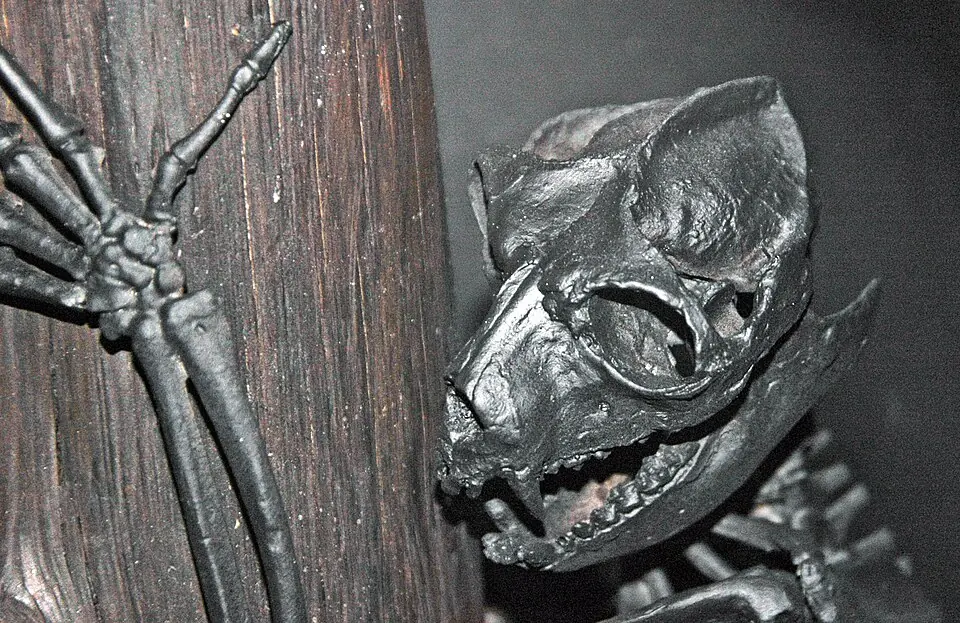
Archicebus achilles, found in China and about 55 million years old, is the oldest nearly complete primate skeleton, with the grasping hands, forward-facing eyes and nails that define the group.
Primates are distinguished by prehensile hands and feet, meaning that they can grasp, and by nails in place of claws. Their orbits, the bony sockets of the eyes, face forward, so that both eyes see the same scene: this is binocular vision. Archicebus achilles, discovered in China and dated to about 55 million years ago, is the oldest primate skeleton recovered nearly complete. The animal weighed some thirty grams, the weight of a mouse. Its anatomy supports the hypothesis that early primates were diurnal, arboreal and insectivorous: active by day, living in trees and eating insects. A nocturnal form was long placed at the base of the order, the group that contains all primates.
Why it matters
Prehensile hands and eyes able to judge distance are the two characters that every primate has kept, and Archicebus, an animal of thirty grams, already had both. All later primates, the human species included, have used hands and eyes shaped by a life spent capturing insects in branches.
Dating & uncertainty
The oldest primate skeletons date from about 55 million years ago, immediately after the warming between the Palaeocene and Eocene epochs. Molecular clocks, which date lineages from differences between the DNA of living species, indicate an older lineage. So do the plesiadapiforms, extinct Palaeocene mammals related to primates. Complete specimens of this older lineage are lacking.
Earth history as one day
23:42:3317 min 27 s before midnight
if Earth’s 4.54 billion years were compressed into a single day