LIFE × CLIMATE
Dinosaurs of the Arctic
~80 to 66 million years ago
Phanerozoic · Mesozoic · Cretaceous
Dinosaurs nested north of the seventy-fifth parallel, in what is now Alaska, between 80 and 66 million years ago, in a place where winter darkness lasted about four months and temperatures fell below freezing.
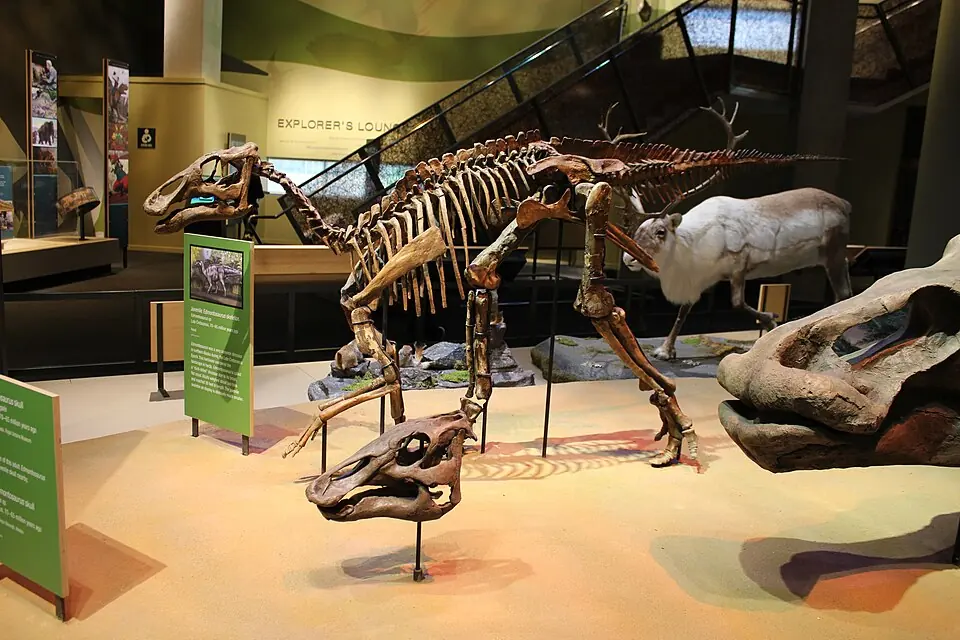
The dinosaurs of the Arctic lived north of the seventy-fifth parallel, in what is now northern Alaska. Winter darkness there lasted about four months and temperatures fell below freezing. Druckenmiller and colleagues (2021) report hatchlings, the young just out of the egg, of most of the dinosaur families recorded at this site, in the same rock layers. These dinosaurs therefore nested there. The obvious explanation would be a migration: the animals would travel north to breed and depart afterwards. Migrating animals would leave adults and eggs, but not young at every stage. Most of these dinosaurs, if not all, therefore remained through the winter.
Why it matters
An egg takes several months to hatch, and the growing season there lasts about six months. Animals unable to maintain their body temperature through the dark half of the year would have had difficulty fitting the hatching of the eggs into the growing season. These nests are therefore a direct argument that dinosaurs were endothermic, that is, that they produced their own body heat. Other arguments rest on bone chemistry or on posture. Unlike them, the argument from nests is immediately verifiable.
Dating & uncertainty
The bone beds, rock layers rich in bones, of Alaska and of Chukotka, in Russia, date from the last twenty million years of the Cretaceous. Researchers do not measure the severity of the winters: they estimate it from fossil leaves and tree rings. The two best sites give different results. The microstructure of the bones from Chukotka shows no mark of seasonal stress. The microstructure of the bones of the Alaskan hadrosaurs, a family of dinosaurs, shows such marks.
Earth history as one day
23:34:3725 min 22 s before midnight
if Earth’s 4.54 billion years were compressed into a single day