CLIMATE
The African Humid Period
~11,000 to 5,500 years ago
Phanerozoic · Cenozoic · Quaternary · Holocene · Greenlandian
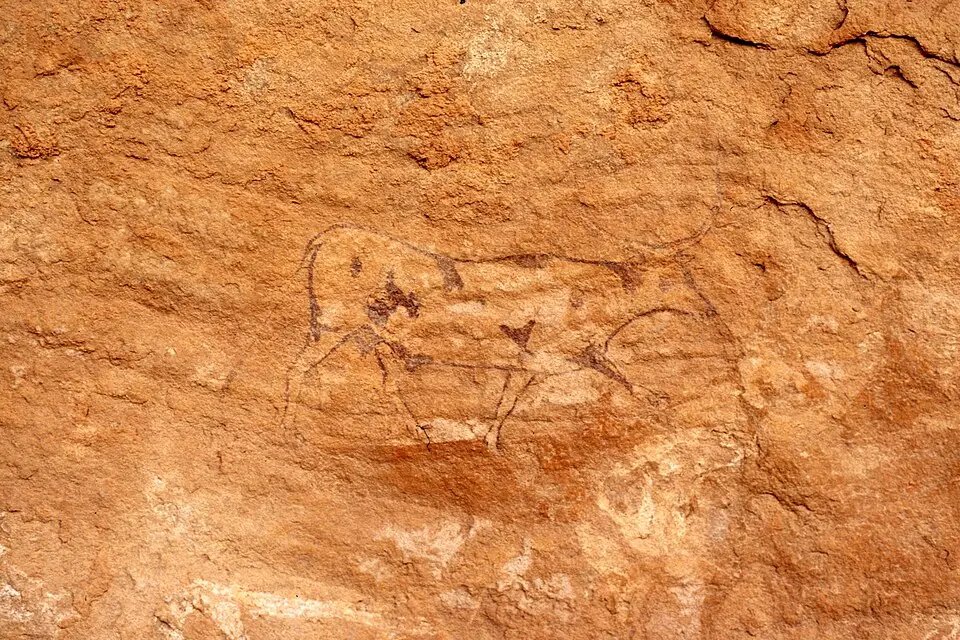
The Sahara was a grassland between 11,000 and 5,500 years ago, when the summer monsoon reached further north, with lakes full of hippopotamuses and fish and with cattle herders who painted the rock.
The African Humid Period is the interval in which the summer monsoon, the seasonal wind that brings the rains, extended north and the Sahara became grassland. Hippopotamuses and fish lived in its lakes, and cattle herders left paintings on the rock. The cause is precession, the slow rotation of the direction in which the Earth's axis points. Precession shifts the season at which the northern hemisphere is closest to the Sun, and that shift changes the strength of the monsoon. As precession continued, the rain returned south and the Sahara, the largest hot desert on the planet, re-formed.
Why it matters
No other transformation of a landscape during human history has been this large, and it occurred independently of any human action. A region the size of a subcontinent, inhabited for millennia, lost its population. Whether the drying took a few centuries or three thousand years remains disputed. If it took a few centuries, it was a catastrophe that made populations move. If it took three thousand years, it was a gradual constraint spread over some hundred generations.
Dating & uncertaintyDisputed
Lake deposits, pollen and rock art establish that North Africa was green, and this is not disputed. The duration of the drying is disputed. Some sites indicate a drying that lasted a few centuries, others a drying that lasted three thousand years, and the two readings have not been reconciled.
Earth history as one day
23:59:59.79209 ms before midnight
if Earth’s 4.54 billion years were compressed into a single day