TECHNOLOGY × HUMAN EVOLUTION
The Origins of Agriculture
~11,500 years ago
Phanerozoic · Cenozoic · Quaternary · Holocene · Greenlandian
Agriculture began about 11,500 years ago, when people sowed what they had harvested, weeded and kept herds nearby, long before the plants and animals concerned took their domestic form.
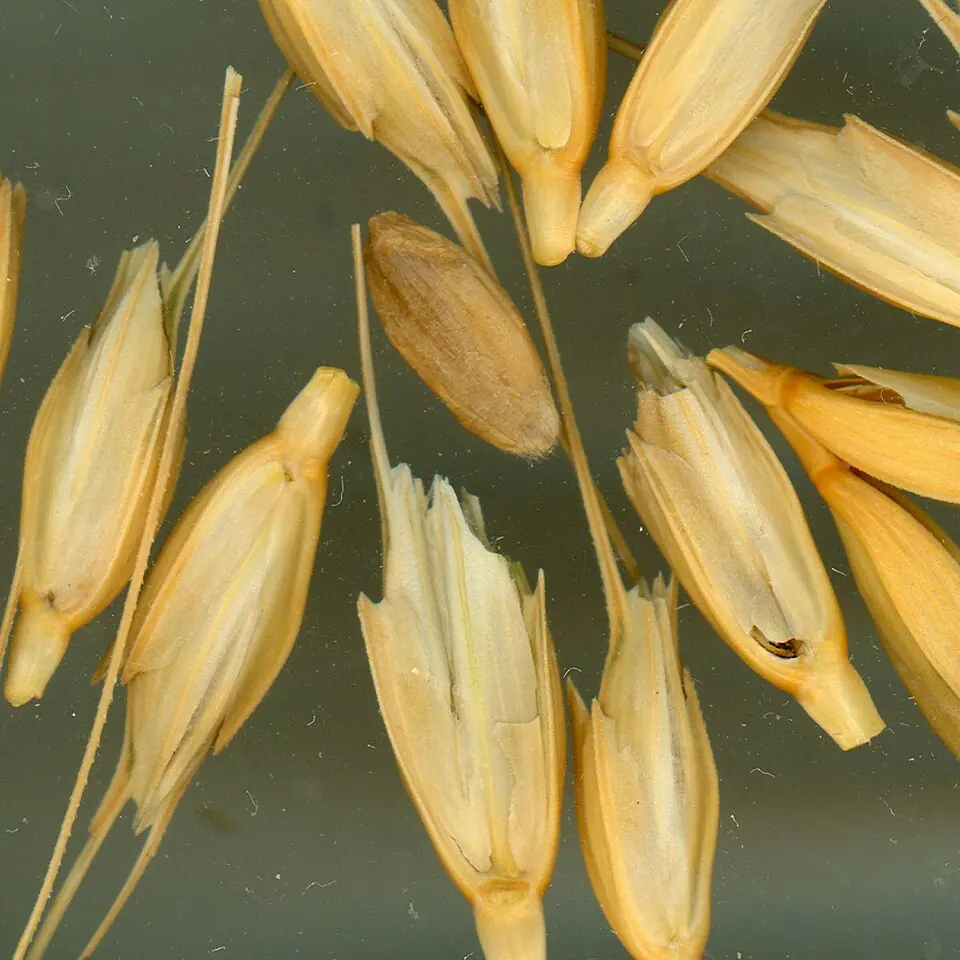
Agriculture is the practice of cultivating plants and herding animals. It began with practices applied to plants and animals that still had their wild form: people sowed what they had harvested, weeded around it and kept herds nearby. The visible characters of domestication appeared two thousand years later. Together they are called the domestication syndrome. In cereals they are larger grains and, above all, a non-shattering rachis. The rachis is the axis of the ear, and in a domestic cereal it no longer breaks at maturity, so the ear retains its seed instead of dispersing it. This character is advantageous to the harvester and lethal to a wild plant, which can no longer sow itself. The transition to agriculture also occurred independently in China, Mexico and New Guinea.
Why it matters
With agriculture, mobile populations of hunter-gatherers, people who live on wild plants and animals, gave way to sedentary societies able to build up reserves. Agriculture is the foundation of cities, states, writing and a durable growth in human numbers. Two thousand years separate the first cultivation from the first domestic forms, and that interval indicates that no one intended the result. Cultivation, repeated over generations, transformed the plants before anyone could have observed the change.
Dating & uncertainty
Domestication is a process and has no single starting date. Its earliest indications at a site are charred seeds and changing proportions of species. These indications precede by millennia the anatomical changes that allow a grain to be called domestic. In the Near East, the dates cluster around 11,500 years ago for the first cultivation and the first herded flocks, and around 9,500 years ago for cereals no longer able to sow themselves.
Earth history as one day
23:59:59.78219 ms before midnight
if Earth’s 4.54 billion years were compressed into a single day