GENETICS × HUMAN EVOLUTION
Lactase Persistence
~7,500 years ago
Phanerozoic · Cenozoic · Quaternary · Holocene · Northgrippian
Lactase persistence is the lifelong production of lactase, the enzyme that breaks down milk sugar and that most mammals stop making after weaning, and in Europe the single-letter DNA change that causes it spread from about 7,500 years ago.
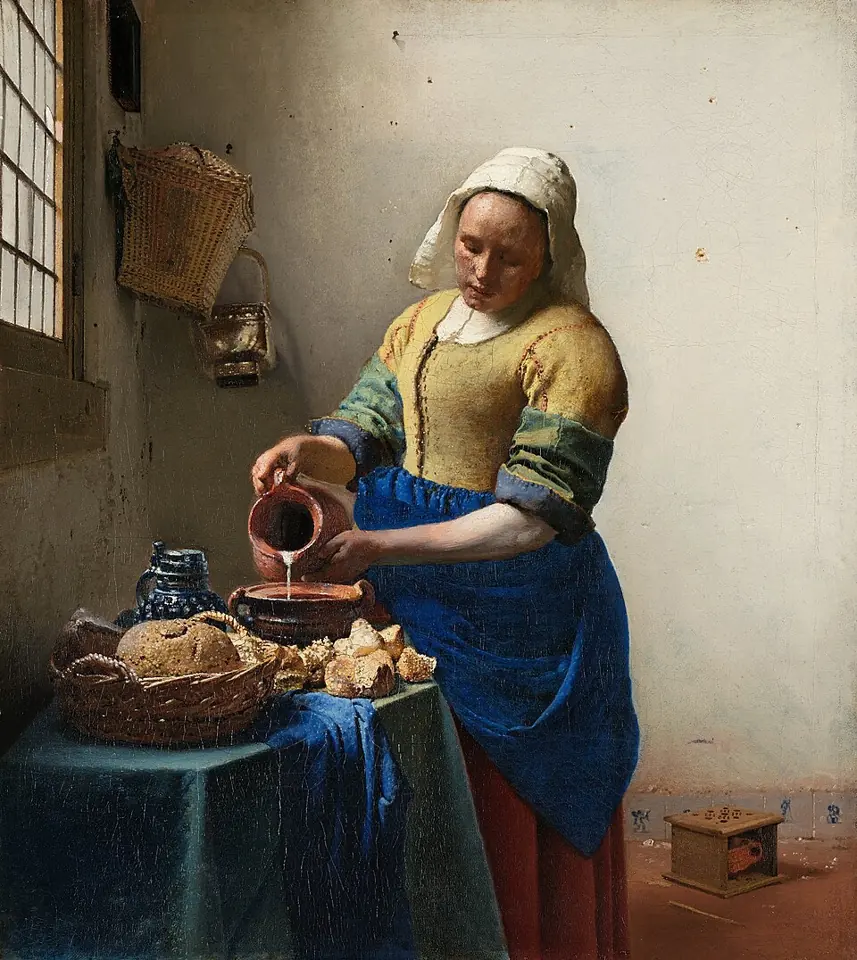
Lactase persistence is the condition in which the gene for lactase stays switched on for life. Most mammals cease producing lactase once they are weaned. In Europe, the condition comes from a change to a single letter of DNA upstream of the gene, in the stretch of DNA that precedes it. This variant, the changed form of the DNA, spread faster than almost any other in the human genome. Several other populations, in Africa and elsewhere, reached the same tolerance of milk through mutations, or DNA changes, of their own. Such independent appearance of one trait in several populations is called convergent evolution. People had been drinking milk for thousands of years before the European variant became common. The selective advantage, the benefit that led carriers of the variant to leave more descendants, therefore cannot have been the milk alone.
Why it matters
Lactase persistence is the example that best establishes that a practice, here the drinking of milk, can modify the genome of a population, that is, the complete DNA its members carry. The modification happened more than once, in Africa and elsewhere as well as in Europe. The European variant may have brought its benefit during famine and disease rather than at the ordinary meal. In those conditions, drinking milk one cannot digest stops being a discomfort and becomes a risk.
Dating & uncertainty
The date given, about 7,500 years ago, is that at which the variant comes under selection, that is, when its carriers begin to leave more descendants than others. The selection began among dairying farmers, who kept animals for milk, in a region between the central Balkans and central Europe. Researchers estimate the date from ancient DNA and from the length of the chromosome segment carried along with the mutation, the stretch of DNA inherited with it. The rapidity of the variant's spread is disputed. Milk had been consumed for millennia before the variant became frequent, and the models best fitted to the data point to famine and disease rather than to dairying alone.
Earth history as one day
23:59:59.86143 ms before midnight
if Earth’s 4.54 billion years were compressed into a single day