EXTINCTIONS × EARTH
The Capitanian Extinction and Emeishan
~262 to 259 million years ago
Phanerozoic · Paleozoic · Permian
The Capitanian extinction removed most corals and most brachiopods, two-shelled marine animals, from tropical shallow seas between 262 and 259 million years ago, while the Emeishan volcanic province erupted in what is now south-west China.
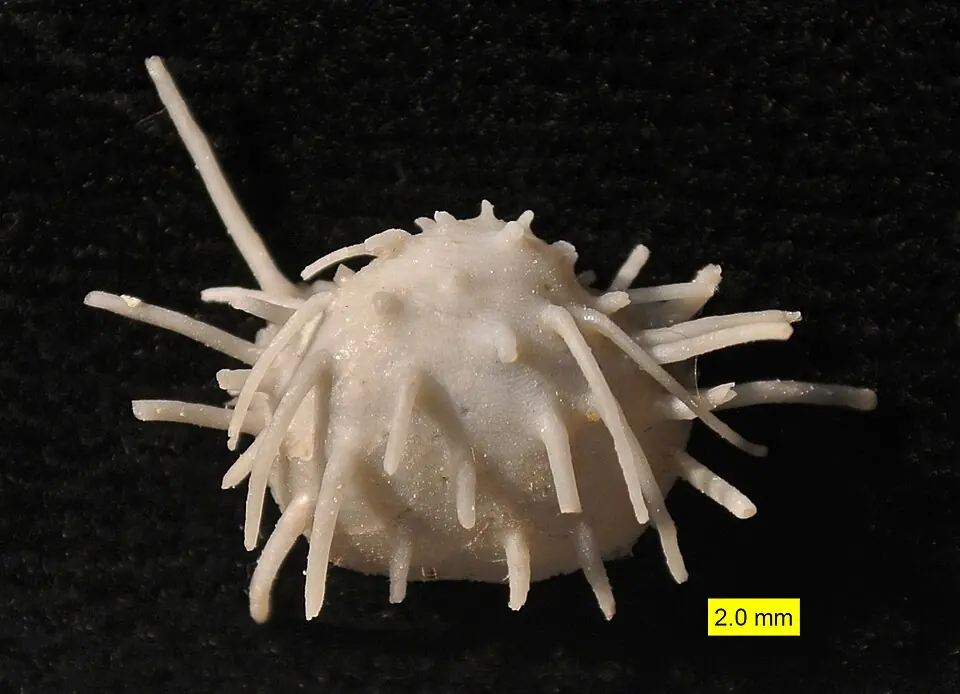
The Capitanian extinction is the loss of most corals, large foraminifera and brachiopods in the tropical shallow water of the eastern Tethys, an ocean of that time. Foraminifera are single-celled organisms with a shell. The extinction came eight million years before the end-Permian mass extinction, while the Emeishan large igneous province, a vast volume of volcanic rock, erupted through what is now south-west China. Mercury released by those eruptions appears in the sediments in pulses. Eruptions are the principal natural source able to distribute mercury worldwide through the atmosphere, so mercury serves as a volcanic marker. A bed, a layer of sediment, enriched in mercury therefore dates the eruption relative to the extinction.
Why it matters
The Capitanian extinction resembles the end-Permian mass extinction on a smaller scale: the same supercontinent and the same kind of trigger. With two crises of the same form, eight million years apart, researchers can test the relation between flood volcanism and mass extinction instead of assuming it. Flood volcanism is the eruption of lava in vast sheets. So far, the test establishes a close coincidence in time. The mechanism is proposed and not demonstrated: the eruptions would have caused marine anoxia, a loss of oxygen in seawater, and global warming.
Dating & uncertaintyDisputed
It is not settled whether the Capitanian extinction is one event or a series of closely spaced crises, nor how large it was. Some geological records show a gradual decline through the Capitanian, a subdivision of the Permian period, rather than an abrupt loss. Mercury spikes and revised uranium-lead dates, ages from the decay of uranium into lead, place the losses alongside pulses of the Emeishan eruptions. Ling and colleagues (2023) and Wei and colleagues (2026) read this coincidence as a causal relation, although the kill mechanism remains disputed.
Earth history as one day
22:36:531 h 23 min before midnight
if Earth’s 4.54 billion years were compressed into a single day