EARTH
The Break-Up of Pangaea
~201 to 135 million years ago
Phanerozoic · Mesozoic · Jurassic
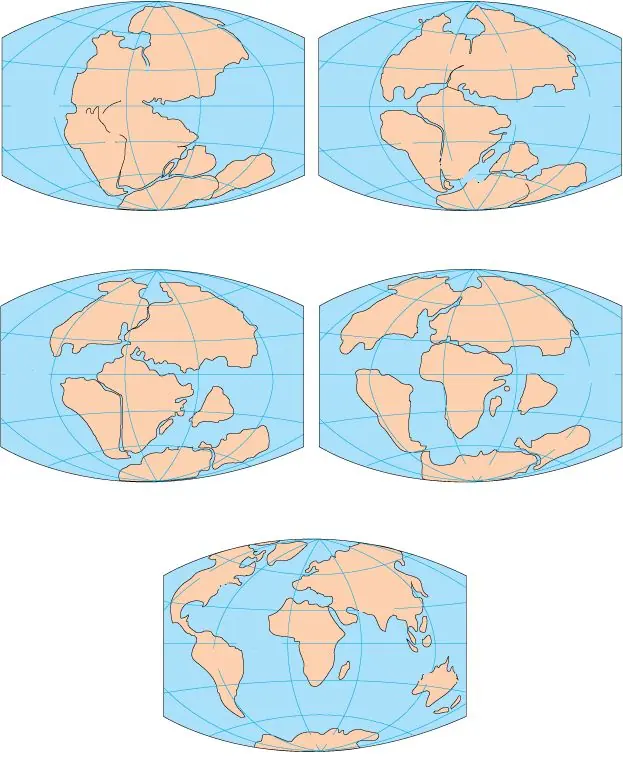
Pangaea, the supercontinent that joined all the continents, broke up between 201 and 135 million years ago by rifting, the stretching of the crust until it parts, and a flood of basalt preceded each episode.
Pangaea was a supercontinent that joined all the continents. It broke up by rifting. A flood of basalt, a volcanic rock, preceded each episode. The Central Atlantic province erupted about 200 million years ago. The Karoo and Ferrar eruptions, 183 million years ago, opened the western Indian Ocean. The Parana and Etendeka lavas erupted 135 million years ago, immediately before the South Atlantic opened. The Atlantic opened from the middle outwards. Gondwana, the southern part of Pangaea, separated into several pieces, each with its own biota, its set of living species.
Why it matters
Every coastline whose outline appears to fit another results from the break-up of Pangaea. The fracturing of a continent also opens shallow seas, modifies currents and isolates whole faunas. This isolation explains why the plants and animals of the southern continents are related but not identical. Researchers have not established whether the basalt caused the fracturing or merely accompanied it.
Dating & uncertainty
The break-up of Pangaea is a sequence of episodes. Earlier episodes of rifting failed. The rifting that finally divides Pangaea begins in the Triassic period. The Central Atlantic province erupts around 200 million years ago, and the central Atlantic opens in the earliest Jurassic, the start of the period that follows the Triassic. The Karoo and Ferrar eruptions, 183 million years ago, open the western Indian Ocean. The Parana and Etendeka province erupts 135 million years ago and precedes the opening of the South Atlantic. The lavas generally accumulate away from the place where the ocean finally opens, so researchers still doubt that the lavas caused the opening.
Earth history as one day
22:56:141 h 4 min before midnight
if Earth’s 4.54 billion years were compressed into a single day