LIFE × EVOLUTION
Synapsids Before the Dinosaurs
~270 to 252 million years ago
Phanerozoic · Paleozoic · Permian
Synapsids, relatives of mammals, were the large land animals for twenty million years before the end of the Permian, among them the tusked dicynodonts, which lived in herds, and the sabre-toothed gorgonopsians that hunted them.
Synapsids are relatives of mammals that, for twenty million years before the end of the Permian, were the large land animals. Dicynodonts were tusked herbivores that moved in herds, and gorgonopsians, with sabre teeth, hunted them. The bones of these synapsids fill whole basins, the low areas where sediment accumulates, in South Africa and Zambia, chief among them the Karoo. Their lineage first leaves no fossils at all for a long interval. Nearly every major group then appears within less than ten million years. This is the usual pattern of a radiation, a rapid diversification, that fossils record only after it has happened.
Why it matters
The end-Permian extinction removed the large synapsids. Mammals then remained small and nocturnal for 150 million years. Before the extinction, the same lineage had included the largest land animals. The small size of the survivors therefore results from a catastrophe and not from a biological rule.
Dating & uncertainty
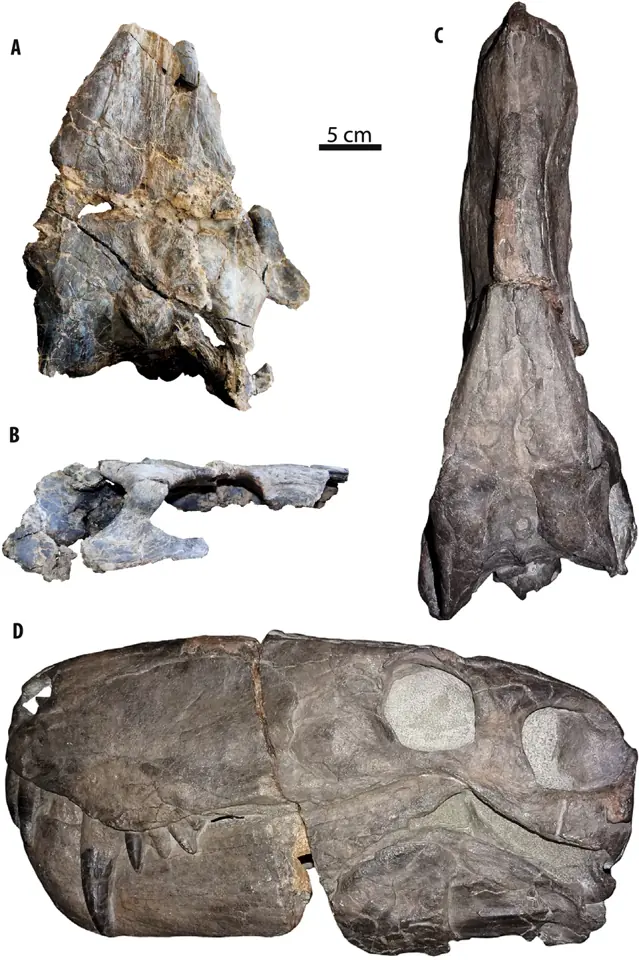
The Middle Permian radiation is that of therapsids, the synapsids that include dicynodonts and gorgonopsians. It is dated with relaxed clock models, which let the rate of evolution vary between lineages. These models are applied to a long ghost lineage, one that left no fossils, so the age of therapsid origins is only loosely fixed. A gorgonopsian from Mallorca, older than any African specimen, indicates a tropical rather than a temperate origin. The Karoo fossils would then show a late part of this history, not its beginning.
Earth history as one day
22:34:211 h 26 min before midnight
if Earth’s 4.54 billion years were compressed into a single day