GENETICS
The First Neanderthal DNA
1997 CE
History · Contemporary · Holocene · Meghalayan
In 1997, Svante Pääbo's team read the first DNA of an extinct human, from the arm bone of the Neanderthal found in 1856, and it matched no living population.
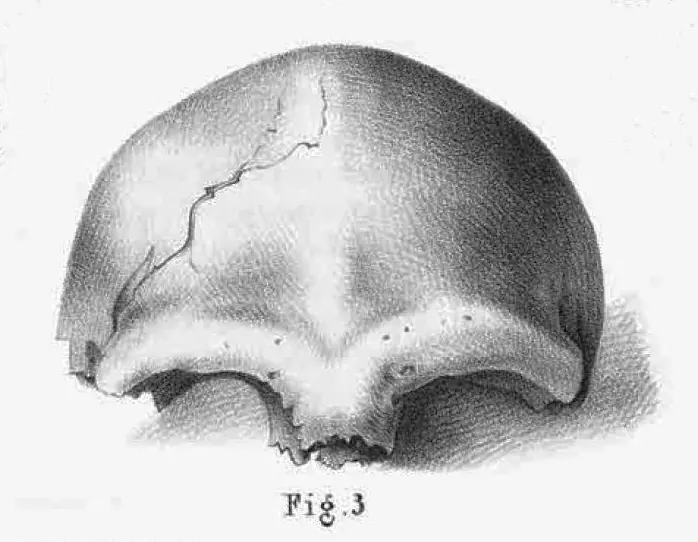
The first DNA sequence of an extinct human is obtained in 1997 by the team of Svante Pääbo, in Munich, from the arm bone of the Neanderthal specimen exhumed in 1856 in the Neander valley: the mitochondrial sequence read corresponded to that of no present-day population. Two technical difficulties had been resolved. Ancient DNA survives only in very short fragments, which are amplified in overlapping segments and then reassembled; and age leaves on those fragments a chemical signature, cytosine deamination, which regularly transforms that base near the broken ends. Modern DNA introduced by contamination is long, intact and devoid of that alteration, which allows it to be set aside. The conclusion then drawn, namely the absence of Neanderthal contribution to our ancestry, rested on mitochondrial DNA alone.
Why it matters
Ancient DNA moved questions of ancestry, migration and admixture from the domain of interpretation to that of measurement, and all the genetic results presented in this edition proceed from methods tested on this bone. The first result also illustrates the limits of a single marker: the 1997 conclusion was revised in 2010 by sequencing of the nuclear genome, which established admixture. Contamination by contemporary DNA faithfully imitating an authentic result, clean rooms, independent replication and verification of degradation signatures have become the conditions of admissibility in the discipline.
Dating & uncertainty
The 1997 sequence comes from the original 1856 Neanderthal specimen. It established the absence of a Neanderthal mitochondrial lineage in present-day populations, which does not exclude admixture: a minority mitochondrial lineage can disappear without the corresponding nuclear ancestry disappearing.
Our species’ history as one day
23:59:528.0 s before midnight
if the 315,000 years of Homo sapiens were compressed into a single day