TECHNOLOGY × SOCIETY
M-PESA and Mobile Money in Kenya
2007 CE
History · Contemporary · Holocene · Meghalayan
M-PESA, launched in Kenya in 2007, lets money be deposited, sent and withdrawn by mobile phone, through a ledger kept by the operator, its agents replacing bank branches.
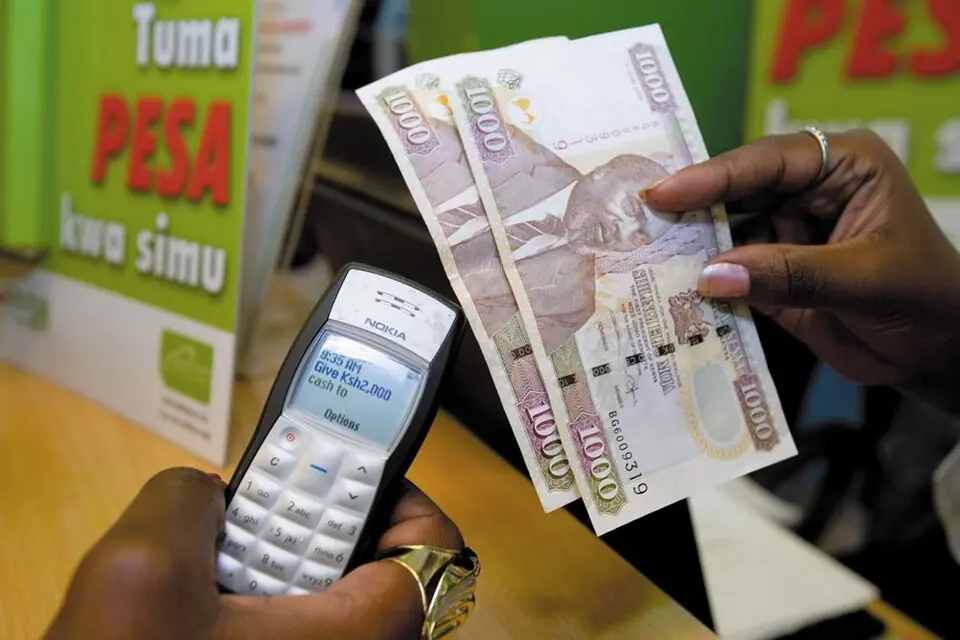
M-PESA, a service launched in Kenya in 2007 by the operator Safaricom, allows money to be deposited, transferred and withdrawn by mobile telephone; its name joins the initial of mobile to the Swahili word pesa, meaning money. No value circulates: the service keeps a ledger, and transactions are entries. The user hands notes to a local agent, most often a shopkeeper, who credits the account attached to the telephone number; the transfer message orders an entry between two lines of the ledger; another agent, elsewhere in the country, hands back the notes. The agent network replaces bank branches and the telephone replaces the card. The majority of Kenyan households had adopted the service within a decade.
Why it matters
The effects were measured and not assumed: access to the service raised consumption per head and lifted about 2 per cent of Kenyan households out of poverty, the gains being more marked in female-headed households, some of which moved from agriculture into trade. Across much of the developing world, access to financial services was established by telephone rather than by the opening of branches, which allowed a century of banking infrastructure to be bypassed.
Dating & uncertainty
The launch dates from 2007. By the 2010s, access to a mobile telephone was more widespread worldwide than access to a toilet, the fastest diffusion observed for any technology.
Our species’ history as one day
23:59:545.2 s before midnight
if the 315,000 years of Homo sapiens were compressed into a single day