SOCIETY × GENETICS
The Transatlantic Slave Trade
16th to 19th centuries
History · Early Modern · Holocene · Meghalayan
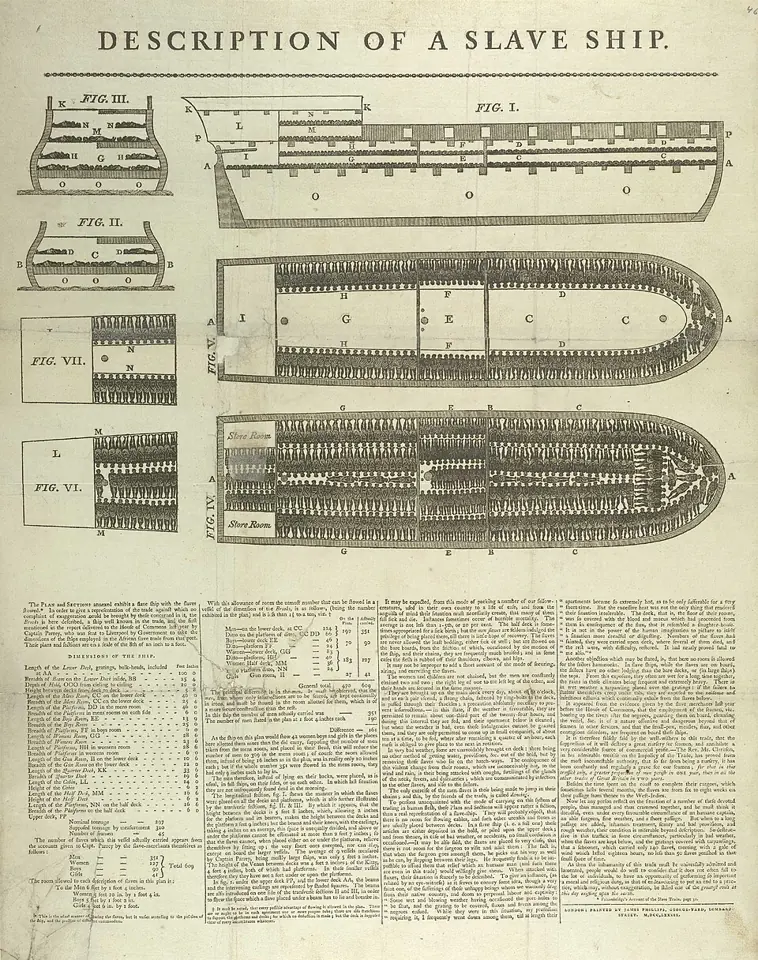
The transatlantic slave trade deported about 12.5 million Africans between the sixteenth and nineteenth centuries, and the DNA of more than fifty thousand people on both sides of the Atlantic has been compared with the ship registers.
The transatlantic slave trade, documented by the ship registers assembled in the transatlantic slave trade database, concerns about 12.5 million Africans deported between the sixteenth and nineteenth centuries. Comparison of those registers with the DNA of more than fifty thousand people on both sides of the Atlantic restores in essentials the documented routes. The divergences observed are interpreted by means of a distinction: a register records embarkations, a genome records individuals who left descendants. A region strongly represented in the registers and weakly in the DNA of present-day populations therefore indicates not a smaller number of captives, but higher mortality or reduced fertility. The gap between the two series thus documents what the registers did not enter: unequal survival, forced movement within the Americas, and transmission of African ancestry more through women than through men, in proportions still debated.
Why it matters
The genetic documentation restores individual information for people whom written sources accounted for as cargo. Tens of millions of descendants can relate their ancestry to regions that the registers designated only by a port of embarkation. The published corrections to the largest of these studies form part of the dossier, the measurement of an atrocity being subject to the same methodological requirements as any other scientific work.
Dating & uncertainty
The trade extends from the early 1500s to the 1860s and concerns about 12.5 million people; the date retained falls midway. Genetic estimates of regional origins and of sex bias carry real uncertainties, and the published corrections to the principal study are among the sources cited.
Our species’ history as one day
23:58:031 min 57 s before midnight
if the 315,000 years of Homo sapiens were compressed into a single day