GENETICS
The Human Genome Project
2003 CE
History · Contemporary · Holocene · Meghalayan
The Human Genome Project published a first draft of the human sequence, three billion base pairs, in 2001 and the finished sequence in 2004, with a public consortium and a private company racing side by side.
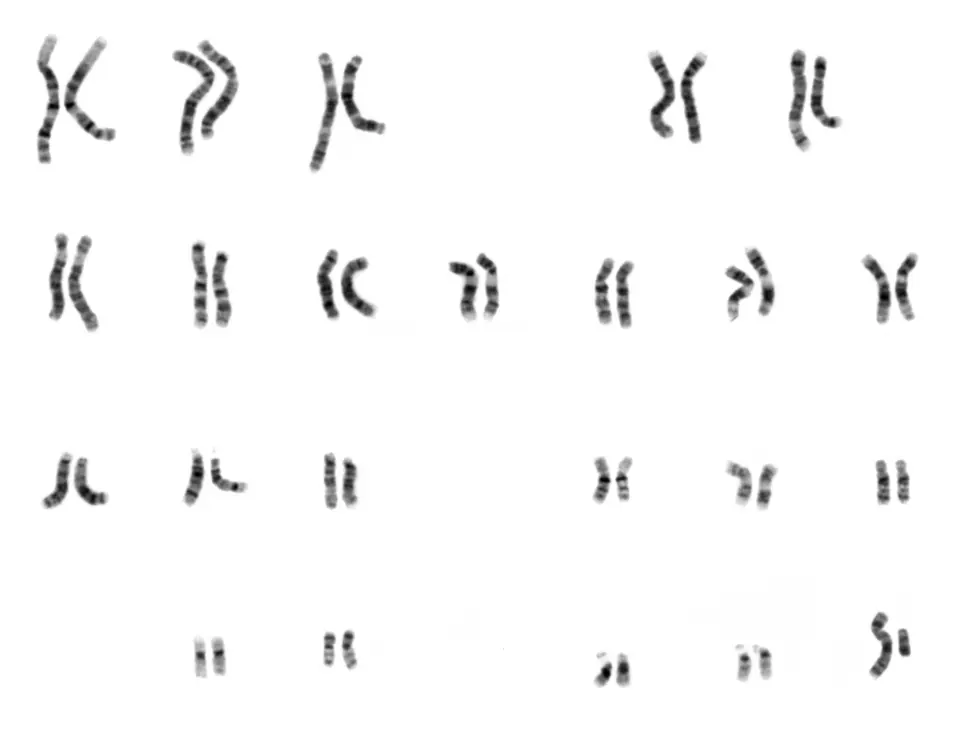
The Human Genome Project, an international public consortium begun in 1990, published a first draft of the human genome sequence in 2001, concurrently with the private company Celera Genomics, then the finished sequence in 2004: about three billion base pairs, with one error per hundred thousand bases, and 20,000 to 25,000 protein-coding genes. That last figure contradicted earlier estimates, which predicted some hundred thousand genes for a complex organism. Two facts account for it: a single gene can be read in several ways, by a mechanism known as alternative splicing, and produce several proteins; and the greater part of the genome codes no protein but regulates the timing, location and intensity of gene expression. Complexity therefore lies in regulation rather than in the number of coding elements.
Why it matters
The sequence constitutes the reference to which every human genome, ancient or contemporary, is referred, including those presented in this edition. Genomic medicine, genetic genealogy and forensic identification depend on it. The fall in sequencing costs following the programme has brought an operation of several billion dollars down to the level of a routine test.
Dating & uncertainty
Completion of the project was proclaimed in April 2003, fifty years after publication of the double helix; the term then designated 99 per cent of the gene-rich fraction, euchromatin, and not the entire genome. The remaining segments, repetitive and difficult to assemble, were completed only two decades later.
Our species’ history as one day
23:59:536.3 s before midnight
if the 315,000 years of Homo sapiens were compressed into a single day