LIFE × EVOLUTION
Arbuscular Mycorrhiza
~407 million years ago
Phanerozoic · Paleozoic · Devonian
Arbuscular mycorrhiza is an association in which fungal threads grow into the cells of plant roots and branch there into tufts where soil nutrients are traded for sugar, and it already existed about 407 million years ago.
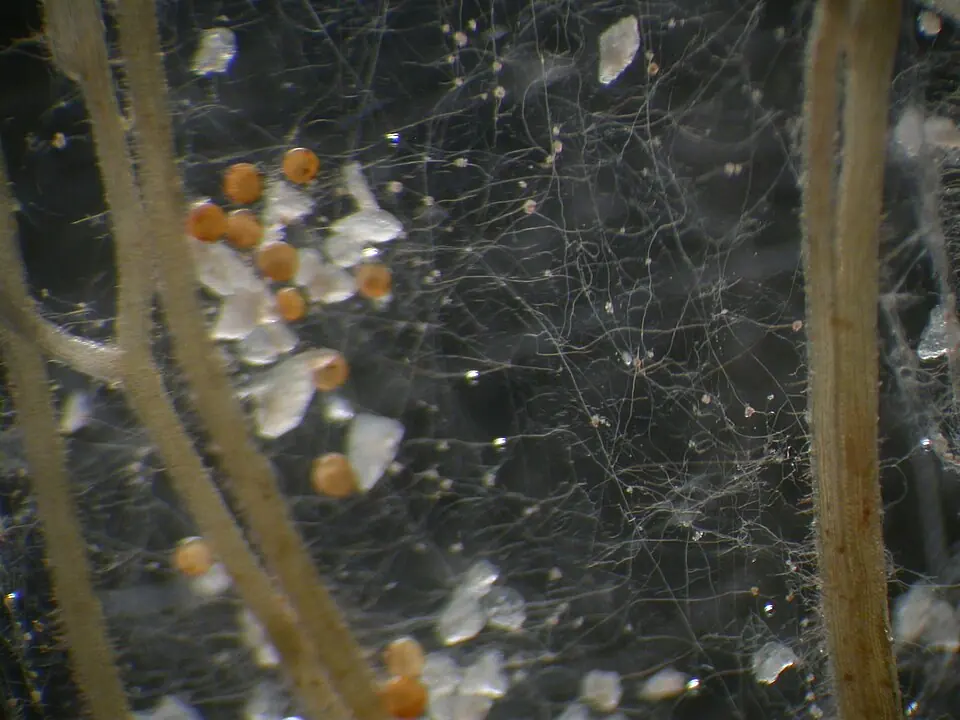
Arbuscular mycorrhiza is an association between a fungus and a plant. Fungal threads grow into the cells of the plant root and branch inside them into fine bushy tufts called arbuscules. Across the surface of the arbuscules, the two partners exchange soil nutrients for sugar. Fossil arbuscules are preserved inside their host cells in a Scottish chert, a rock made of silica, that is 407 million years old. In shape these fossil arbuscules cannot be distinguished from the arbuscules of living plants. Most plants on Earth still form the same association four hundred million years later, which indicates that the association was established before roots themselves.
Why it matters
The first plants had no true roots, and fungi did the work of roots for them. Fungi lived on the continents before plants did. Plants probably spread onto the continents thanks to their association with fungi.
Dating & uncertainty
The Rhynie chert, in Scotland, preserves the association in cellular detail and is about 407 million years old. This fossil gives the association only a minimum age. Molecular dating, which estimates dates from differences between the DNA of living species, places the origin of arbuscular mycorrhizae about 480 million years ago. The oldest land plants may have associated with an entirely different fungal group, and the usual fungal partners of present-day plants may have replaced that group only later.
Earth history as one day
21:50:542 h 9 min before midnight
if Earth’s 4.54 billion years were compressed into a single day