LIFE × EVOLUTION
The Devonian Nekton Revolution
~410 to 360 million years ago
Phanerozoic · Paleozoic · Devonian
The Devonian nekton revolution is the proposed shift of fish, ammonoids and their predators from the seabed into open water, where swimming animals form the nekton, between 410 and 360 million years ago, and its timing is unsettled.
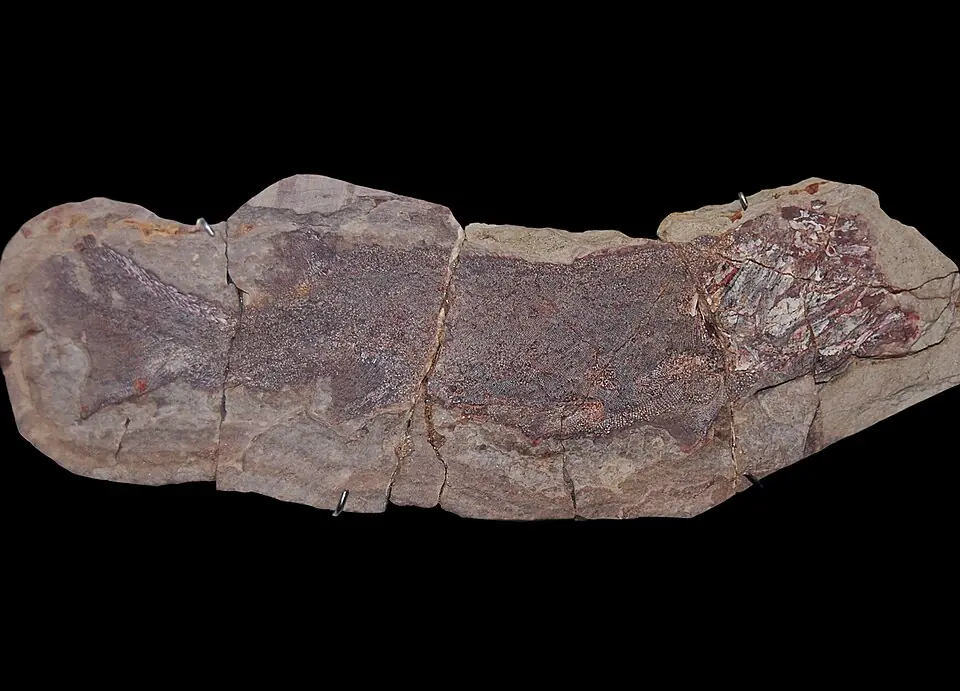
The Devonian nekton revolution is a shift proposed by Klug and colleagues (2010), in which fish, ammonoids and their predators left the seabed for open water. Nekton is the set of animals that swim actively in open water. Ammonoids are extinct molluscs with a coiled shell. These animals exchanged a surface for a volume. The timing of the shift is unsettled. The authors place it in the Devonian, a geological period, and attribute it to competition on a crowded seabed and to abundant plankton, small drifting organisms, to feed on. Whalen & Briggs (2018) later published a count standardised by rarefaction. Rarefaction compares assemblages, the sets of organisms found together, at equal sample size, so that a difference in collecting effort is not counted as a difference in diversity. This count finds swimming animals already well established before the Devonian, and their share of the fauna falling during the Devonian rather than rising.
Why it matters
The open ocean is the largest habitat on the planet. The occupation of the open ocean made food webs, the networks of who eats whom, three-dimensional. The explanation for this occupation depends on its pace. If the occupation was rapid, pressure from a crowded seabed explains it. If the occupation was gradual across the whole Palaeozoic, the era that includes the Devonian, the passage of time alone explains it.
Dating & uncertaintyDisputed
The dates displayed follow Klug and colleagues (2010), for whom animals occupied the water column, the water between the seabed and the surface, in the Devonian, under pressure from an already crowded seabed. Whalen & Briggs (2018) later corrected for uneven sampling. Their analysis finds swimming animals well established before the Devonian and no acceleration during the Devonian. On the reading of Whalen & Briggs, there is only a slow rise across the whole Palaeozoic, and no single date can be given.
Earth history as one day
21:49:572 h 10 min before midnight
if Earth’s 4.54 billion years were compressed into a single day