LIFE × EARTH
The Devonian Stromatoporoid Reefs
~390 to 372 million years ago
Phanerozoic · Paleozoic · Devonian
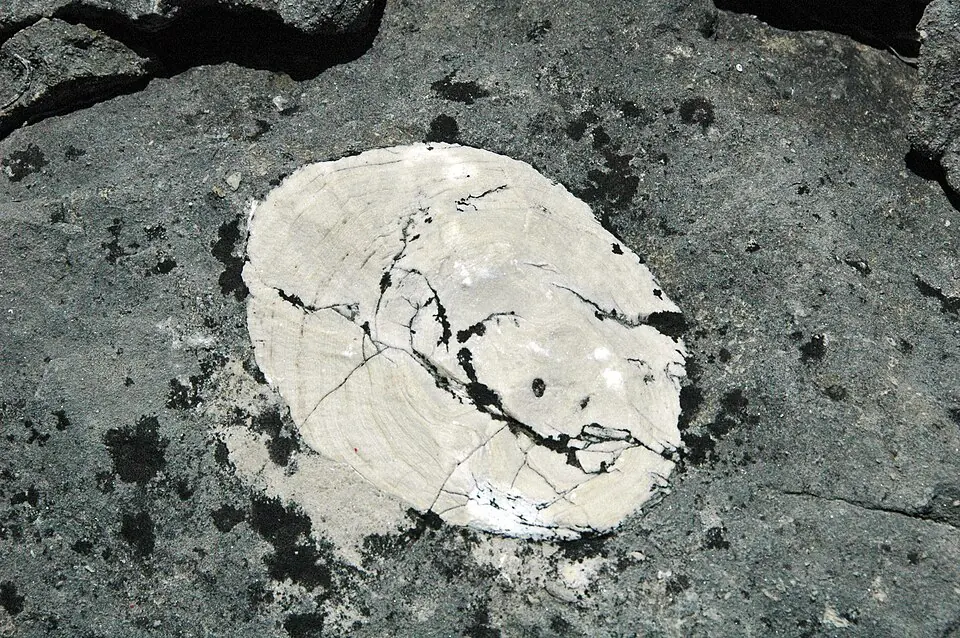
The Devonian stromatoporoid reefs were built between 390 and 372 million years ago by calcified sponges called stromatoporoids and by tabulate corals, in tracts larger than any before or since, the Great Barrier Reef included.
Stromatoporoids are calcified sponges, sponges with a mineral skeleton. In the Devonian they built reefs together with tabulate corals, an extinct group of corals. Their reef tracts, belts of reefs, were larger than any before or since, the Great Barrier Reef included. The reef tracts were already contracting before the extinction at the Frasnian-Famennian boundary, the limit between successive ages of the Late Devonian, and this extinction ended them. Bacteria then built the reefs again, as they had before animals existed. The last stromatoporoids persisted in South China for millions of years after the others had disappeared.
Why it matters
After the extinction, coral reefs did not reappear for more than twenty million years. This is the longest interruption in the whole fossil record of reefs. The delay shows what an ecosystem loses in an extinction: surviving animals can replace the animals that disappear, but the survivors must rebuild the reef structure entirely.
Dating & uncertainty
Reef area reaches its maximum in the Middle Devonian. It declines through the Frasnian, an age of the Late Devonian, before the extinction that marks the end of the Frasnian. The last stromatoporoid reefs survived in South China into the terminal Devonian, the very end of the period. The collapse was therefore staggered over time and not instantaneous.
Earth history as one day
21:56:172 h 4 min before midnight
if Earth’s 4.54 billion years were compressed into a single day