LIFE × EVOLUTION × CLIMATE
The First Land Plants
~470 million years ago
Phanerozoic · Paleozoic · Ordovician
The first plants to live out of water were small, flat and rootless plants of about 470 million years ago, closer to a liverwort, a low plant related to mosses, than to a plant with a stem, and are known mostly from their spores.
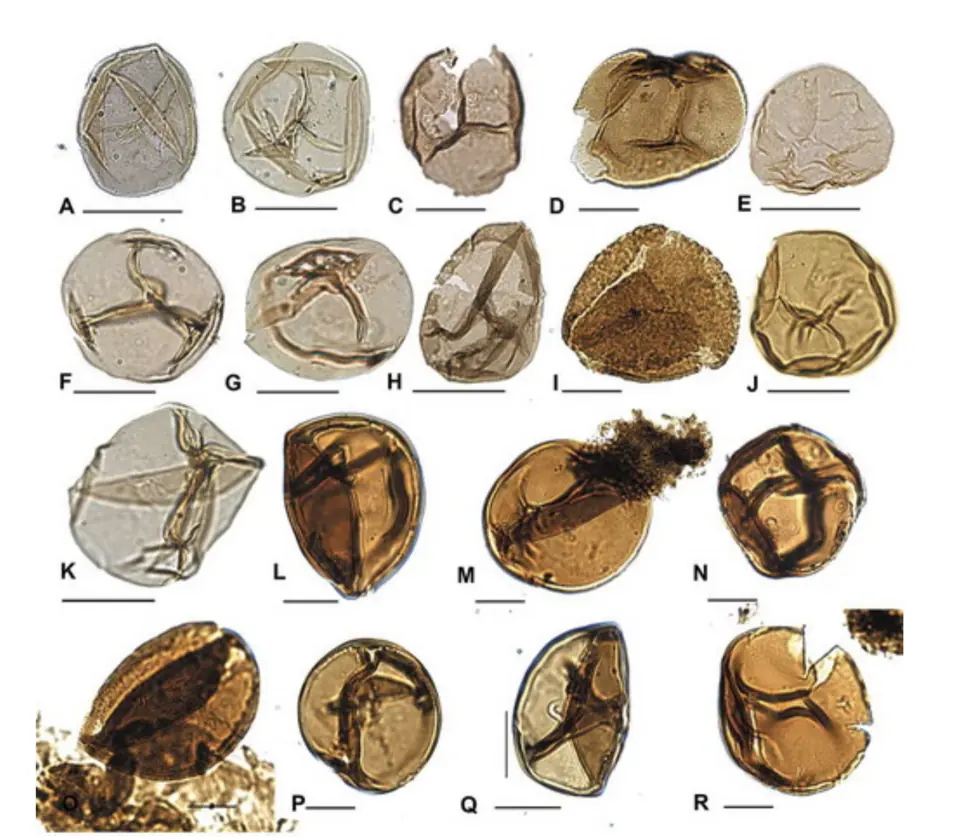
Embryophytes are the land plants, and the earliest of them were small, flat and rootless, closer to a liverwort than to a plant with a stem. They are known almost entirely from cryptospores. A spore is a small reproductive body that a plant releases, and a cryptospore has a distinctive wall that survives where tissue does not. Cryptospores are scattered by the million through rock of the Ordovician period. A few fragments of tissue found in Oman still contain spores within their cases, the capsules in which the plant formed them. The oldest cryptospores come from Argentina and are 473 to 471 million years old.
Why it matters
For four billion years the continents were bare rock and crusts of microbes. Vegetated land is younger than the animals of the Cambrian seas. The first fifty million years of land plants are known only from spores. The plants that produced the spores appear as identifiable fossils only in the Silurian, the period after the Ordovician.
Dating & uncertainty
The cryptospores from Argentina, 473 to 471 million years old, are the oldest direct trace of land plants. A molecular clock dates the split between two lineages from the differences between their genes, at a rate set on dated fossils. Clocks set on the wider plant fossil record make a Cambrian origin the most probable, well before any preserved fossil. That gap is unresolved.
Earth history as one day
21:30:552 h 29 min before midnight
if Earth’s 4.54 billion years were compressed into a single day