LIFE × EVOLUTION
The Coiling of the Ammonoid Shell
~409 to 393 million years ago
Phanerozoic · Paleozoic · Devonian
Ammonoids are cephalopods, the group that includes squid, whose shell changed from a straight cone to a spiral in the Early Devonian, between 409 and 393 million years ago, then wound tighter through the rest of the Devonian.
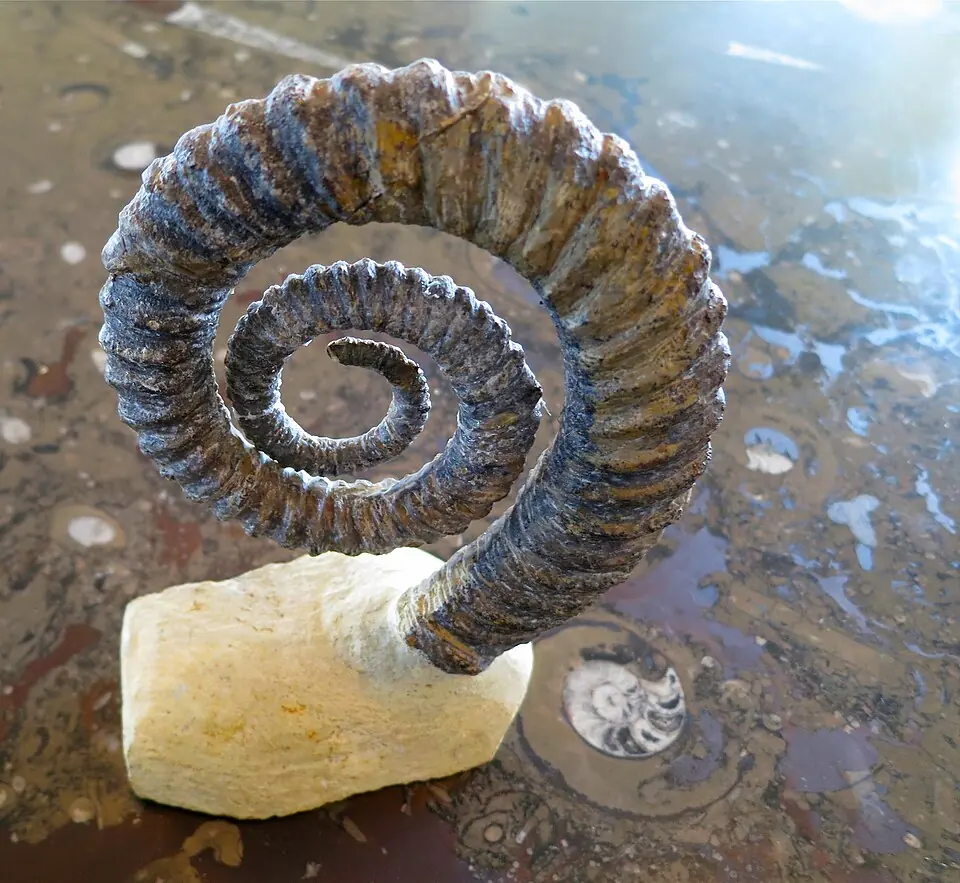
Ammonoids are cephalopods with a spiral shell. This shell derives from a straight cone, which cephalopods coiled into a spiral in the Early Devonian. Through the rest of the Devonian the coil wound tighter. The protoconch, the shell each animal hatches with, grew smaller, and adults in some lineages grew larger. This combination is usually read as a shift towards producing many more offspring. The spiral shell keeps the animal afloat. Its phragmocone, the series of sealed chambers behind the animal, contains gas, and this gas keeps the animal in mid-water without effort. The spiral shell lasted 340 million years and disappeared at the same time as the dinosaurs.
Why it matters
Ammonoids are among the best chronological markers in rock of the Palaeozoic and Mesozoic, two successive eras of geological time. Ammonoid species succeeded one another quickly and were distributed widely. A single shell therefore dates the rock layer containing it to within a few hundred thousand years. Geologists built on ammonoids a substantial part of the chronological scale used elsewhere on this timeline.
Dating & uncertainty
Ammonoids derive from bactritoids, cephalopods with a straight shell, in the Early Devonian. Each new fossil locality changes the date of their first appearance. The embryonic shell also completed its coiling independently in at least three lineages. Any single origin date is a convention and not an observation.
Earth history as one day
21:50:162 h 10 min before midnight
if Earth’s 4.54 billion years were compressed into a single day