EARTH × CLIMATE
Cap Carbonates After the Snowball
~635 million years ago
Proterozoic · Neoproterozoic · Ediacaran
Cap carbonates are a few metres of pale dolostone, a carbonate rock, that lie directly on the glacial debris of the last snowball glaciation, about 635 million years ago, on every continent that preserves this succession.
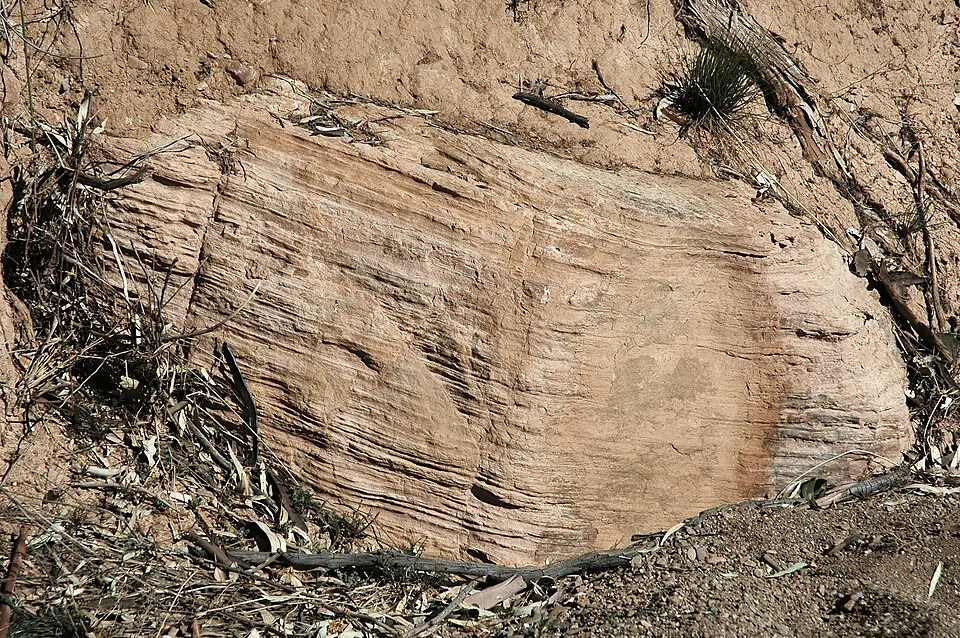
A cap carbonate is the layer of carbonate rock that lies directly on the debris left by the ice at the end of a snowball glaciation, a glaciation that covered the whole planet. The rock is a pale dolostone a few metres thick, found on every continent that preserves this succession. No weathered surface, altered by air and rain, separates the debris from the dolostone, which indicates that no interval elapsed between them. The carbonate precipitated, that is, left sea water as a solid, rapidly and in quantity, because the sea had an exceptionally high alkalinity. Alkalinity is the capacity of water to neutralise acid and to hold dissolved carbonate. Part of it was generated on the seafloor beneath the ice, and rivers delivered the rest as they eroded continents that the ice had just uncovered.
Why it matters
The direct contact between glacial debris and cap carbonate is material evidence that a global glaciation ends as the theory of global glaciation predicts. Carbon dioxide accumulates beneath the ice until its greenhouse effect outweighs the reflection of sunlight by the ice. The glaciation then ends rapidly.
Dating & uncertainty
The cap carbonate rests directly on the glacial debris. Its base therefore dates the end of the Marinoan glaciation, the last snowball glaciation, as precisely as the rock can be dated. The time the cap carbonate took to accumulate is not established. Estimates run from a few thousand to several hundred thousand years. The models that account for the chemistry of the rock do not agree with the models that account for its thickness. The most recent models make plausible a warm but moderate phase, shorter than the hundreds of thousands of years long assumed. They do not exclude a more intense greenhouse climate.
Earth history as one day
20:38:353 h 21 min before midnight
if Earth’s 4.54 billion years were compressed into a single day