SOCIETY
The Global Silver Trade
1571 CE
History · Early Modern · Holocene · Meghalayan
In the sixteenth century, Ming China's switch to silver for money and taxes made the metal worth more there than anywhere else, and from 1571 the Manila galleons carried American silver across the Pacific.
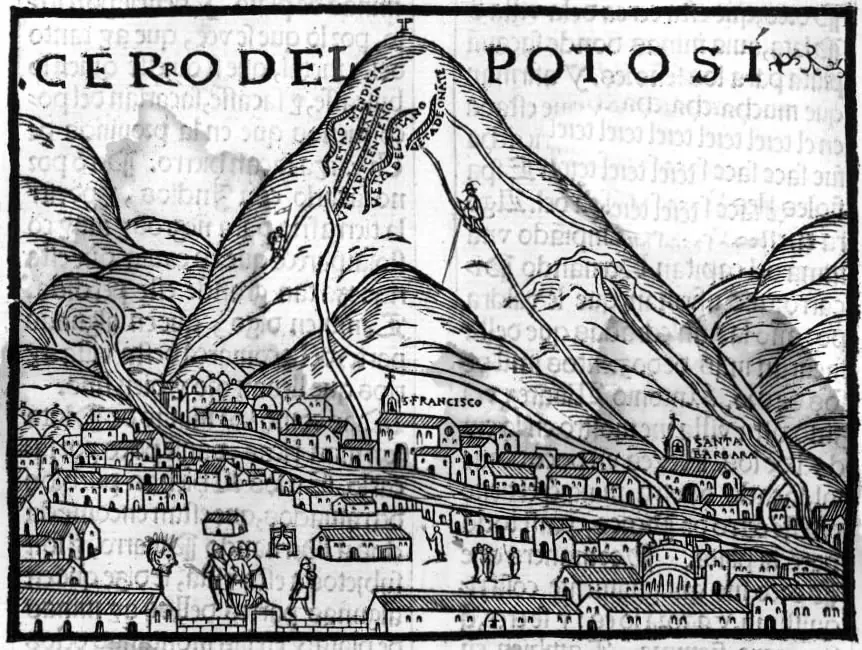
The world silver trade of the sixteenth century proceeds from the conversion of Chinese currency and taxation to that metal under the Ming dynasty. The mechanism is arbitrage: when an economy of that size requires a single metal for the payment of tax, that metal acquires there a value higher than elsewhere, and merchants buy it where it is cheaper to sell it where it is dearer, as long as the difference covers transport costs, the flow ceasing only at the convergence of prices. The price of silver in China doubles relative to the rest of the world; Spanish America and Japan supply tens of thousands of tonnes. From 1571, the Manila galleons carry some fifty tonnes a year across the Pacific. The lead isotopes contained in coinage allow the itineraries to be restored: Mexican metal reaches Europe, that of Potosi reaches China.
Why it matters
Economic historians place in this period the constitution of the first genuinely global exchange circuit, a price set in China determining wages in South America and fortunes in Spain. The system rested on forced labour in the mines, and it accompanied the diffusion of American crops that contributed to the growth of the Chinese population.
Dating & uncertainty
The founding of Spanish Manila in 1571 opens the Pacific branch of the trade, a year taken by historians of globalisation as the starting point of an exchange including the most populous continents. The flows are reconstructed from commercial registers and, more recently, from isotopic analysis of coinage of the period.
Our species’ history as one day
23:57:552 min 5 s before midnight
if the 315,000 years of Homo sapiens were compressed into a single day