SOCIETY × ENVIRONMENT
Roman Lead in Greenland Ice
~100 CE
History · Antiquity · Holocene · Meghalayan
Greenland ice preserves, year by year, the lead released by Roman mining, an atmospheric pollution at hemispheric scale that peaked under the early Empire.
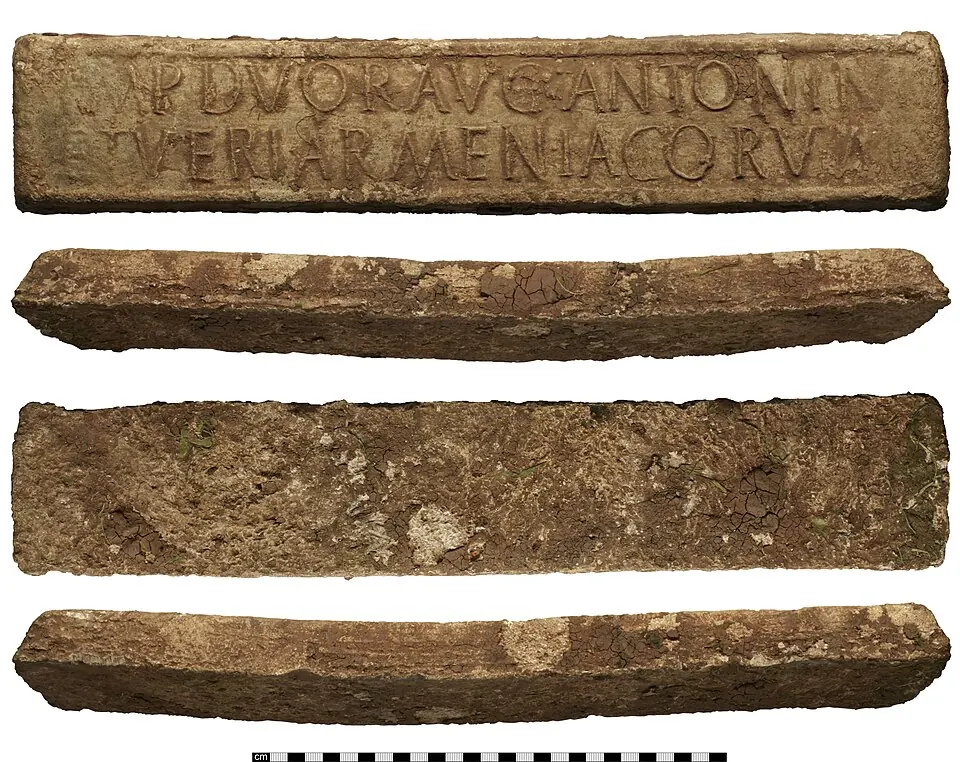
Greenland ice cores preserve, in their annual layers, atmospheric lead originating from ancient mining, principally Iberian. Read year by year, the series records Carthaginian and then Roman activity as atmospheric pollution at hemispheric scale, increasing with imperial expansion, maximal in the early Empire and sharply reduced during the epidemics of the second and third centuries. Geographic attribution rests on lead isotopes, whose proportions vary from one deposit to another according to the age of the rock and its initial uranium content; that signature is modified neither by smelting nor by transport, which permits the lead trapped in the ice to be related to the mining districts of southern Spain, and principally to that of Rio Tinto.
Why it matters
The Roman economy left no statistics, and its assessment ordinarily rests on indirect archaeological indicators. The ice series supplies an annual and continuous measure of metallurgical activity, independent of written sources. It further documents atmospheric pollution of hemispheric scale two millennia before the industrial use of coal.
Dating & uncertainty
The Greenland record is dated layer by layer, to the year, from 1100 BCE to 800 CE; the date retained corresponds to the emissions maximum, in the early Empire. Converting the measured concentrations into European emissions requires modelling of atmospheric transport. Moving from those emissions to an estimate of mining output, coinage or general economic activity constitutes a further inference, supported here by the parallel decline in the fineness of silver coinage.
Our species’ history as one day
23:51:118 min 48 s before midnight
if the 315,000 years of Homo sapiens were compressed into a single day