HEALTH × TECHNOLOGY
The mRNA Covid Vaccines
2020 CE
History · Contemporary · Holocene · Meghalayan
The messenger RNA vaccines against Covid-19 were developed eleven months after the virus genome was published, and a trial of 43,548 people showed 95 per cent efficacy in December 2020.
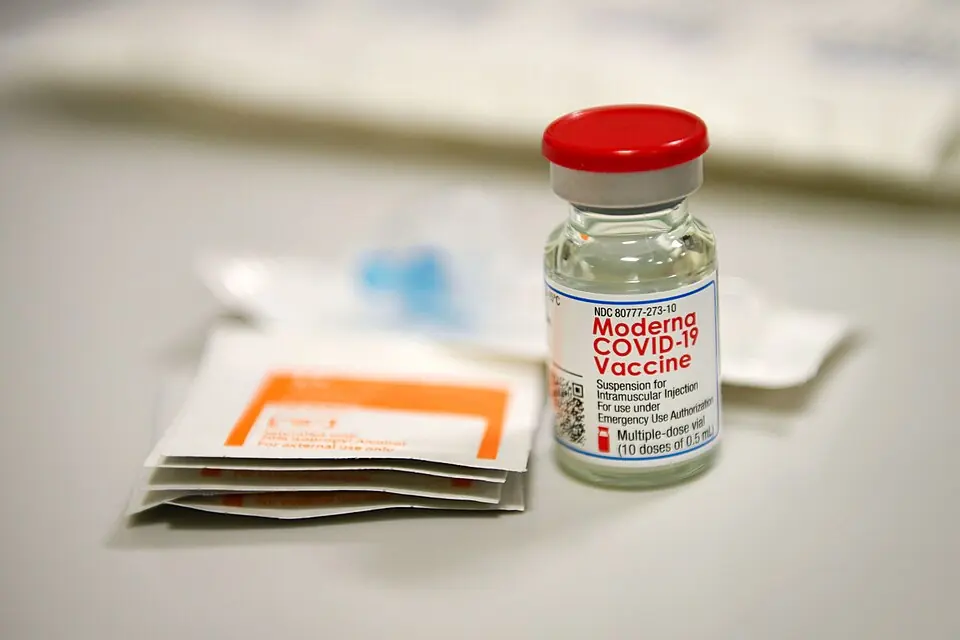
The messenger RNA vaccines against Covid-19 were developed eleven months after publication of the SARS-CoV-2 genome; a randomised trial of 43,548 people, published in December 2020, established an efficacy of 95 per cent after two doses. What is administered is neither an attenuated agent nor a protein, but an instruction. The chain has three terms: a lipid nanoparticle carries the RNA, a fragile molecule, across the cell membrane; the cells read the instruction and manufacture a single piece of the virus, the spike protein, without infectious power; the immune system encounters that shape, memorises it, and will later recognise the virus bearing it. Six-month follow-up confirmed protection, declining with time and highest against severe forms.
Why it matters
Vaccination, established since 1796 on the culture of biological agents, rests here on a written sequence, which brings the design of a vaccine from several years down to a few days. The speed obtained proceeds from decades of prior work: the discovery that modified nucleosides, pseudouridine then N1-methylpseudouridine, reduce the inflammatory reaction provoked by RNA, work by Katalin Karikó and Drew Weissman recognised by the 2023 Nobel Prize in Physiology or Medicine, and the development of lipid nanoparticles for delivery. The same technique is today applied to influenza and to oncological targets.
Dating & uncertainty
The results of the pivotal trial appear in December 2020, eleven months after the viral sequence was shared.
Our species’ history as one day
23:59:581.6 s before midnight
if the 315,000 years of Homo sapiens were compressed into a single day