HEALTH × GENETICS
The Origin of HIV
1981 CE
History · Contemporary · Holocene · Meghalayan
HIV-1 passed from chimpanzees to humans in central Africa at the beginning of the twentieth century, decades before the syndrome it causes was recognised in 1981.
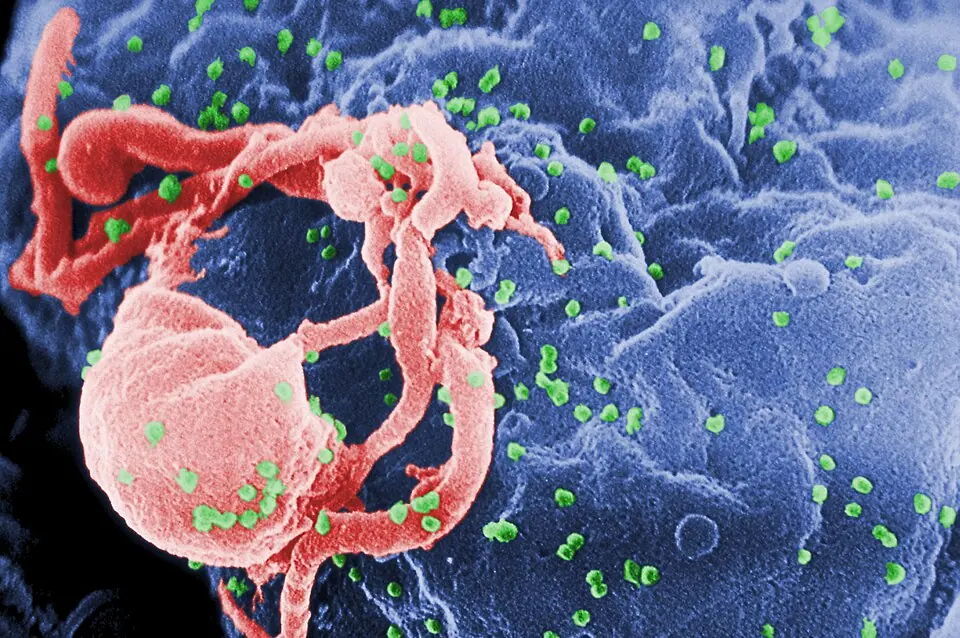
HIV-1, the virus responsible for acquired immunodeficiency syndrome, passed from chimpanzees to humans in central Africa at the beginning of the twentieth century. Phylogeographic reconstruction of viral sequences, set against the oldest preserved archival sample, places the rise of the pandemic strain in Kinshasa as early as the 1920s, its diffusion following the river and rail routes of the Congo basin, several decades before the first recognised cases in 1981. This delay follows from the biology of the virus, which belongs to the genus of lentiviruses, literally slow viruses: eight to ten years most often pass between infection and the first clinical manifestations, a period during which the person is in good health and transmissible. An epidemic so offset produces no perceptible outbreak.
Why it matters
The virus has infected more than eighty million people and killed several tens of millions. Antiretroviral treatments have turned a fatal infection into a controlled chronic condition, but there is neither cure nor vaccine. The history of HIV constitutes the principal argument for surveillance of pathogen transmission from animals to humans, and it has modified how pandemics are analysed: not by the search for a first patient, but by that of the conditions of circulation, urban, colonial and sanitary, that permitted expansion.
Dating & uncertainty
The syndrome is described in 1981 and the virus isolated soon after; genetics subsequently pushed the origin back to the 1920s, with epidemiological acceleration after 1960. The pandemic was some sixty years old when it was named.
Our species’ history as one day
23:59:4712.3 s before midnight
if the 315,000 years of Homo sapiens were compressed into a single day