HEALTH × GENETICS
The Bronze Age Plague
~4,900 years ago
History · Bronze Age · Holocene · Northgrippian
The plague bacterium has been found in Eurasian skeletons from about 4,900 years ago, several millennia before the historical pandemics.
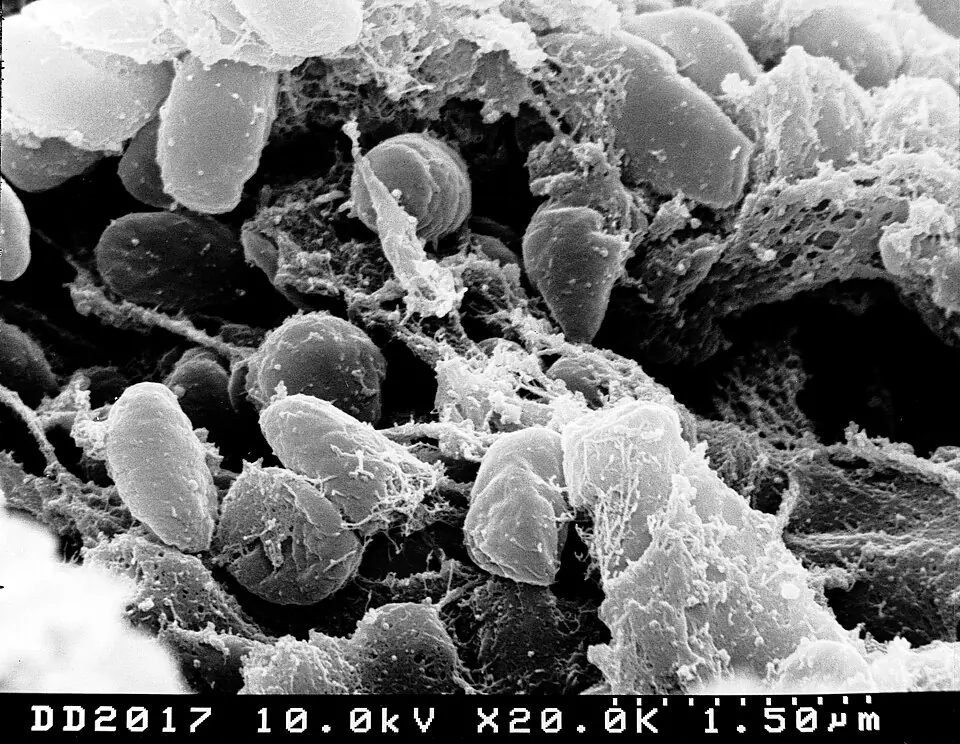
The Yersinia pestis strains known as LNBA, for Late Neolithic and Bronze Age, designate the plague lineages identified in Eurasian skeletons of the late Neolithic and Bronze Age, several millennia before the historical pandemics. They form a single early lineage, attested from Siberia to the Iberian peninsula, lacking the genes permitting flea transmission that later strains possess. The form fully adapted to that vector, responsible for bubonic plague, is attested about 3,800 years ago in the Volga region.
Why it matters
Epidemic disease does not appear as a consequence of urbanisation and maritime transport, but accompanies the first overland exchange networks. The spread of the early lineage is contemporary with the migrations of steppe herders into Europe, an association several authors regard as causal. The case further documents the progressive constitution of a pathogen, through successive losses and acquisitions of genes.
Dating & uncertainty
The early strains are distributed across Eurasia between about 5,000 and 3,500 years before present. They lack the genes allowing the bacterium to survive in the flea's gut and to block it, the mechanism by which the starving insect regurgitates the germ at the next bite. In the absence of that relay, the mode of transmission and the clinical form of the disease they caused remain undetermined. The flea-adapted form appears about 3,800 years ago in the Samara region, a millennium earlier than previously estimated.
Our species’ history as one day
23:37:3622 min 24 s before midnight
if the 315,000 years of Homo sapiens were compressed into a single day