GENETICS × HEALTH
Otzi the Iceman
~5,300 years ago
History · Bronze Age · Holocene · Northgrippian
Otzi is a natural mummy found in the Alps in 1991, a man who died about 5,300 years ago from an arrow in the back and whom the ice preserved with his clothing and tools.
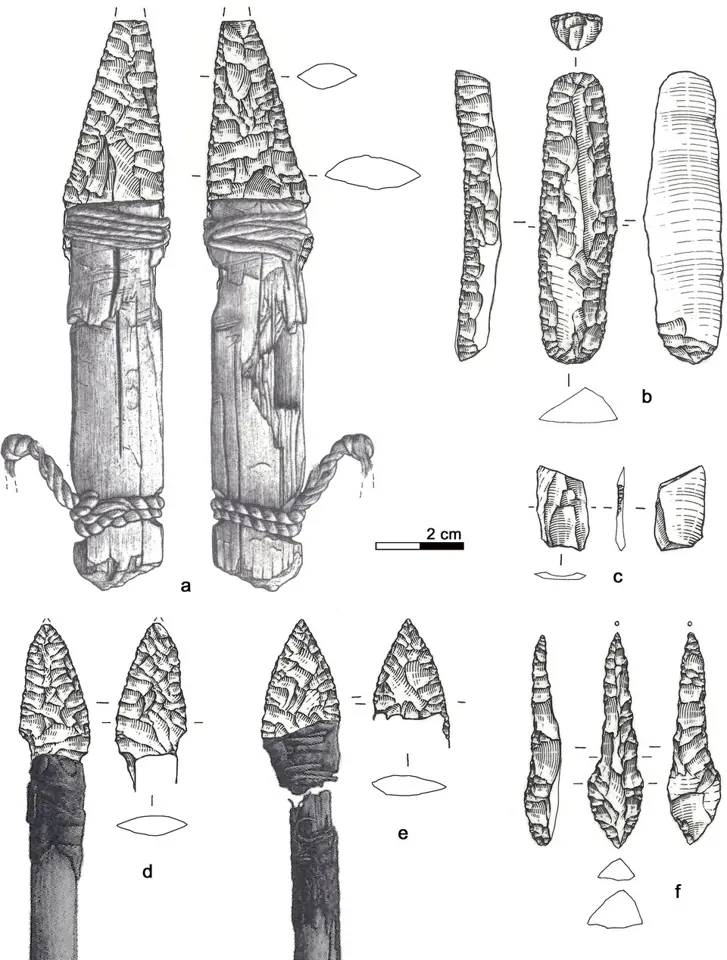
Otzi, also designated the Similaun man, is a natural mummy discovered in 1991 in the Otztal Alps, on the Italian-Austrian border, and conserved in Bolzano. The individual died about 5,300 years ago, struck by an arrow in the back, and the ice preserved the body together with his clothing, equipment and digestive contents. The copper of his axe comes from southern Tuscany and not from the Alpine deposits then worked. His genome indicates predominantly Anatolian ancestry, probably brown eyes and lactose intolerance, and contains the DNA of the bacterium responsible for Lyme disease, regarded as the oldest identified human infection.
Why it matters
A body preserved in its entirety supplies information that no series of skeletons can yield: tattoos located on arthritic joints, moss used as a dressing, stomach contents comprising einkorn and ibex, clothing assembled from the hides of five species. The case further documents the evolution of methods, each generation of analyses modifying the reading.
Dating & uncertainty
Radiocarbon places the death about 5,300 years ago, and the arrowhead remaining in the shoulder establishes its cause. The genome was sequenced again at higher coverage, a term designating the number of readings obtained for each position: ancient DNA presenting as short and altered fragments, a position read only once may mislead, whereas some thirty readings allow an authentic variant to be distinguished from a sequencing error. That second pass corrected several features of the portrait, including pigmentation.
Our species’ history as one day
23:35:4624 min 14 s before midnight
if the 315,000 years of Homo sapiens were compressed into a single day