HEALTH
The Germ Theory of Disease
1882 CE
History · Contemporary · Holocene · Meghalayan
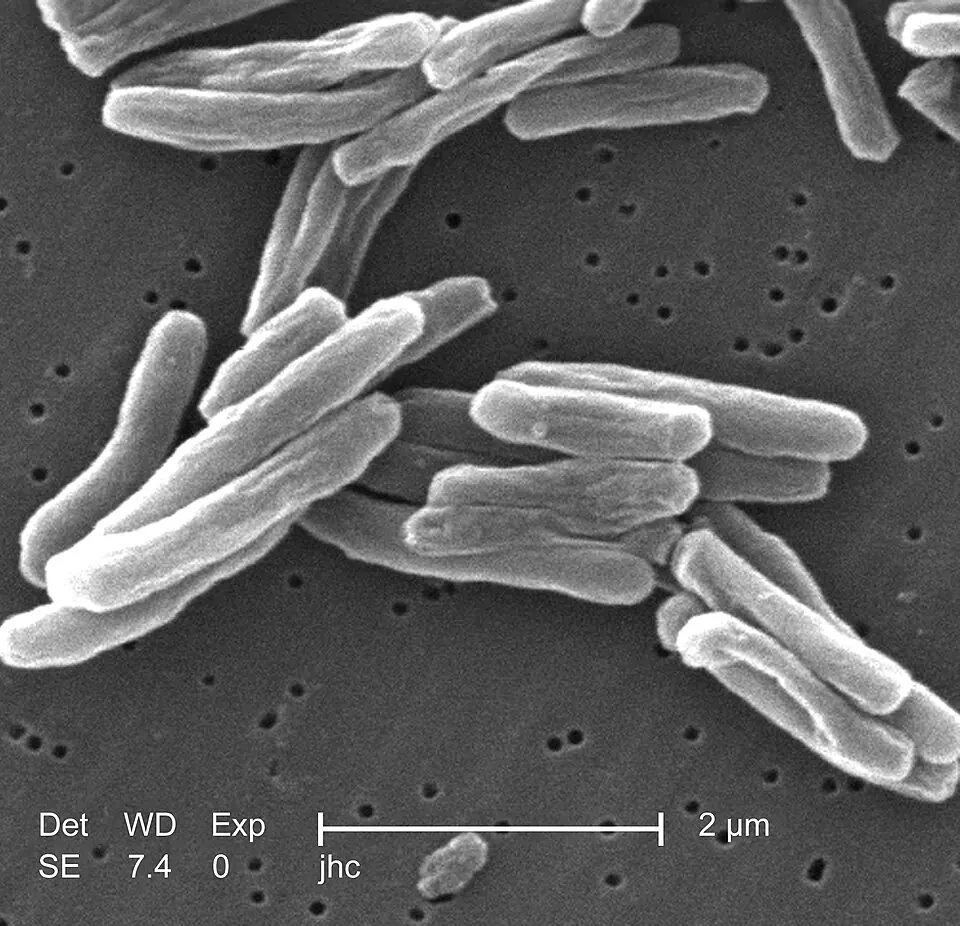
On 24 March 1882, Robert Koch announced the discovery of the tuberculosis bacillus, and within a generation living microbes replaced miasmas as the explanation of infectious disease.
The germ theory of infectious disease substitutes, within a generation, living organisms for earlier explanations by miasmas or humours. Robert Koch established in 1876 the bacterial aetiology of anthrax, then announced on 24 March 1882 the discovery of the tuberculosis bacillus, then the leading cause of death in Europe and North America. The criteria he formulated, known as Koch's postulates, supply the method: the organism must be present in all affected subjects and absent in healthy ones, be cultured in pure medium, reproduce the disease in a healthy animal inoculated with that culture alone, and be recovered from it. The succession of these four conditions transforms a statistical association into a causal demonstration. Rivalry with the Pasteur school accelerates the work, and the agents of cholera and plague are identified within the following two decades.
Why it matters
The identification of a causal agent makes targeted interventions possible, water filtration, surgical antisepsis, specific vaccination and, subsequently, anti-infective chemotherapy. The case further illustrates the mode of diffusion of a scientific theory: it prevails not through its formulation but through the availability of a reproducible method that other teams can apply.
Dating & uncertainty
The date retained is that of the announcement of the tuberculosis bacillus, 24 March 1882. The process is broader, from Koch's anthrax work in the 1870s and Pasteur's campaigns, through the 1880s, a period during which postulates, solid-medium cultures and staining techniques substitute identified organisms for the environmental causes previously invoked.
Our species’ history as one day
23:59:2039.5 s before midnight
if the 315,000 years of Homo sapiens were compressed into a single day