HEALTH × TECHNOLOGY
Fleming and the Discovery of Penicillin
1928 CE
History · Contemporary · Holocene · Meghalayan
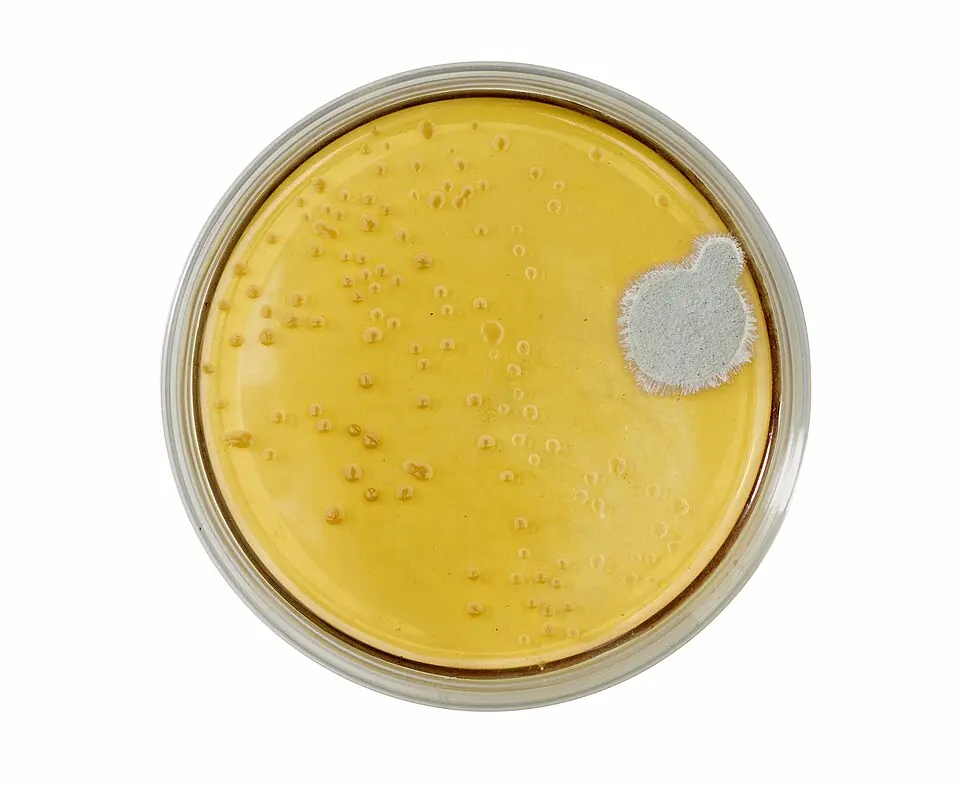
In August 1928, Alexander Fleming noticed that a mould contaminating a culture dish had cleared the staphylococci around it, and identified penicillin.
Penicillin is identified in August 1928 by Alexander Fleming, at St Mary's Hospital in London, on a culture dish contaminated by a mould of the genus Penicillium, since assigned to the species Penicillium rubens, around which the staphylococcus colonies had disappeared. Fleming publishes the observation but does not succeed in isolating the active substance. From 1938, Howard Florey, Ernst Chain and their team at Oxford purify it, establish its clinical efficacy and organise, with American industry, its mass production. The pharmacological principle is that of selective toxicity: penicillin blocks the synthesis of the bacterial wall, a rigid envelope that prevents the cell from bursting under its own osmotic pressure, and of which human cells are devoid. The compound therefore reaches a structure proper to the germ.
Why it matters
Antibiotics condition the whole of subsequent medicine, surgery, cancer chemotherapy and intensive care all presupposing control of infectious risk. The development of the drug further illustrates the collective character of therapeutic innovation, the initial observation having produced effect only after a chain of chemical, clinical and industrial work. The selection of resistant strains by the very use of the treatment constitutes the structural constraint of this class of drugs.
Dating & uncertainty
Fleming's observation dates from August 1928 and remains without sequel for ten years. Pharmaceutical development proper begins in 1938 at Oxford. The 1945 Nobel Prize in Physiology or Medicine is awarded jointly to Fleming, Florey and Chain.
Our species’ history as one day
23:59:3326.9 s before midnight
if the 315,000 years of Homo sapiens were compressed into a single day