CLIMATE × HUMAN EVOLUTION
The Toba Eruption
~74,000 years ago
Phanerozoic · Cenozoic · Quaternary · Pleistocene · Late Pleistocene
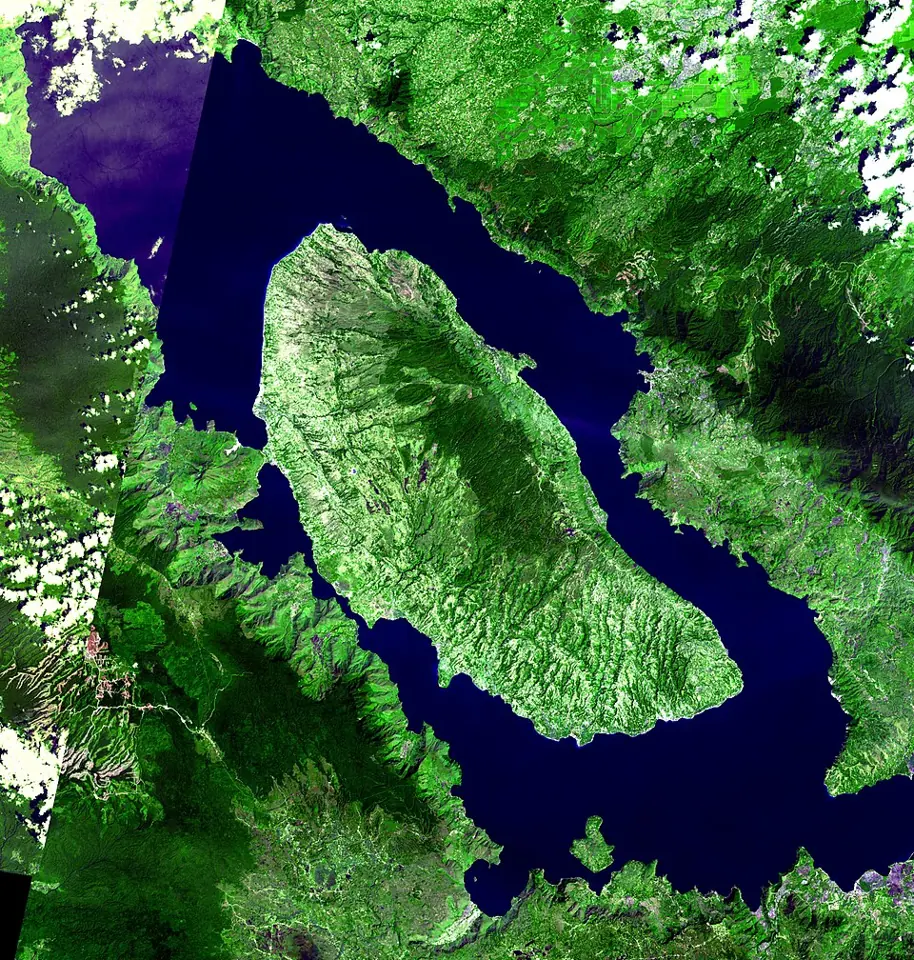
The eruption of Toba, in Sumatra, is the largest known of the last two million years and took place about 74,000 years ago, and for decades it was thought to have nearly wiped out humanity.
Toba, in Sumatra, produced the largest eruption known in the last two million years. The eruption spread ash from India to the floor of the Indian Ocean. For decades it was thought to have nearly wiped out humanity. Two South African sites nine kilometres apart contain glass from the eruption in the form of cryptotephra. Cryptotephra are volcanic shards too small to see but chemically identifiable, so researchers can use them to tie distant sites to a single moment. Smith and colleagues (2018) sampled the two sites layer by layer. They found that people went on living there through the eruption, without interruption.
Why it matters
The idea that the Toba eruption was a catastrophe for humanity was held to be established. It is now being overturned by evidence of the same kind as the evidence that established it. The eruption was taken to show how fragile the human species is, and it now shows that the species continued through the eruption.
Dating & uncertaintyDisputed
The date of the eruption is firmly established. Its effects are not established. The claim that it nearly wiped out the human species is contradicted by South African sites, where occupation continues without interruption below and above the ash layer. The claim is also contradicted by the climate models of Black and colleagues (2021), in which most of Africa cools little, even with the highest estimates of the sulphur released by the eruption.
Earth history as one day
23:59:581.4 s before midnight
if Earth’s 4.54 billion years were compressed into a single day