HUMAN EVOLUTION
The Peopling of the Americas
~23,000 to 15,000 years ago (earliest dates disputed)
Phanerozoic · Cenozoic · Quaternary · Pleistocene · Late Pleistocene
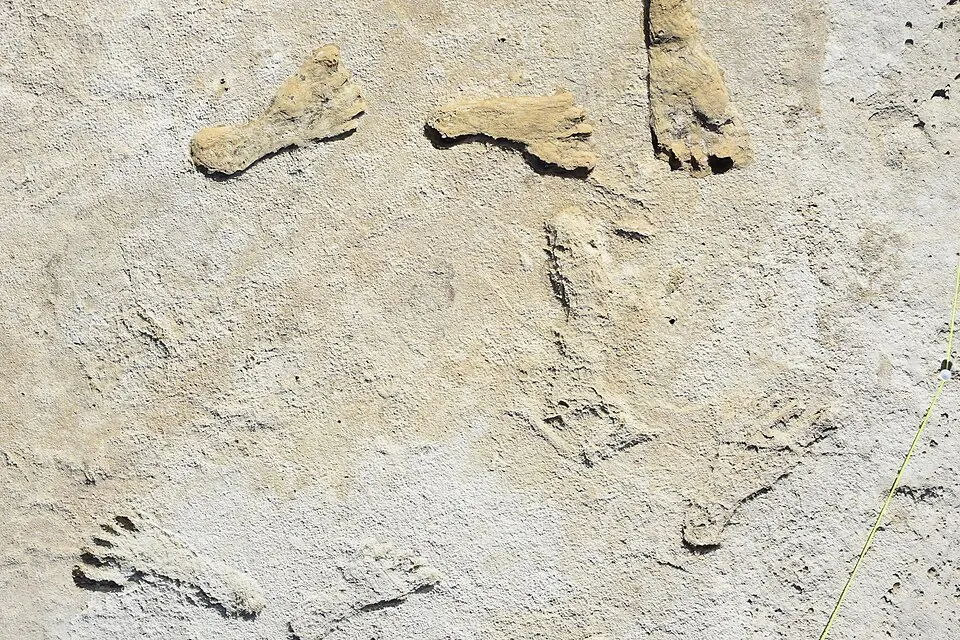
The Americas were the last habitable continent that people reached, by way of the Beringia land bridge and the Pacific coast, and human footprints at White Sands, in New Mexico, are dated to about 23,000 to 21,000 years ago.
The peopling of the Americas is the arrival of humans on the last habitable continent that they reached. They came by way of Beringia, a land bridge that then joined Siberia to Alaska, and the Pacific coast south of it. At White Sands, in New Mexico, human footprints lie between layers of seeds dated to about twenty-three and twenty-one thousand years ago (Bennett and colleagues, 2021). That age would place people there during the glacial maximum, the coldest part of the last ice age. Madsen and colleagues (2022) challenged that chronology in Science, and it was defended in the same issue. No one disputes that people occupied the Americas widely from about fourteen thousand seven hundred years ago, as the climate warmed abruptly. This occupation came before the Clovis culture, an archaeological culture known from its stone spear points, which was long taken for the first.
Why it matters
The date of human arrival changes the explanation of a second event, the disappearance of eighteen genera of large mammals shortly after that arrival. A genus is a group of closely related species. The earlier people arrived, the longer humans and mammoths shared the territory, and the harder it becomes to attribute those extinctions to a sudden encounter between them.
Dating & uncertaintyDisputed
The White Sands footprints lie between layers of seeds dated to 23,000 to 21,000 years ago. That age would place people in North America during the glacial maximum. The seeds were dated by radiocarbon, a method that dates once-living matter from the radioactive carbon it still contains. Madsen and colleagues (2022) contested those dates on the grounds that old carbon dissolved in the lake water could have aged them by several thousand years. The dates were defended in the same issue of Science. Widespread occupation from about 14,700 years ago is not contested.
Earth history as one day
23:59:59.56438 ms before midnight
if Earth’s 4.54 billion years were compressed into a single day