CLIMATE × EARTH
The Late Palaeozoic Ice Age
~360 to 260 million years ago
Phanerozoic · Paleozoic · Devonian
The Late Palaeozoic Ice Age is the span of about a hundred million years, late in the Palaeozoic era of 539 to 252 million years ago, during which ice sheets spread repeatedly over much of Gondwana, formed by today's southern continents.
In the Carboniferous period, about 359 to 299 million years ago, the collision of Gondwana with Laurasia, the landmass of the northern continents, raised the Variscan mountains near the equator. There, rain weathered the rock, breaking it down through reactions that consume carbon dioxide. In the swamp forests of the tropics, called coal forests, plants built their tissues from this gas, and sediment buried their remains before they could rot, so their carbon became coal rather than going back into the air. In the ice age's main phase, from about 330 to 294 million years ago, when ice reached middle latitudes, the air held about 300 molecules of carbon dioxide per million molecules of air. With the Sun about 3 per cent fainter than today, this level of a heat-trapping gas kept the Earth cold enough for its ice to persist. Jurikova and colleagues (2025) worked out these carbon dioxide levels from fossil seashells. Boron, an element dissolved in seawater, has two isotopes, atoms that differ in mass. In a shell, the share of the heavier one falls as the sea grows more acidic, which it does as it absorbs carbon dioxide from the air.
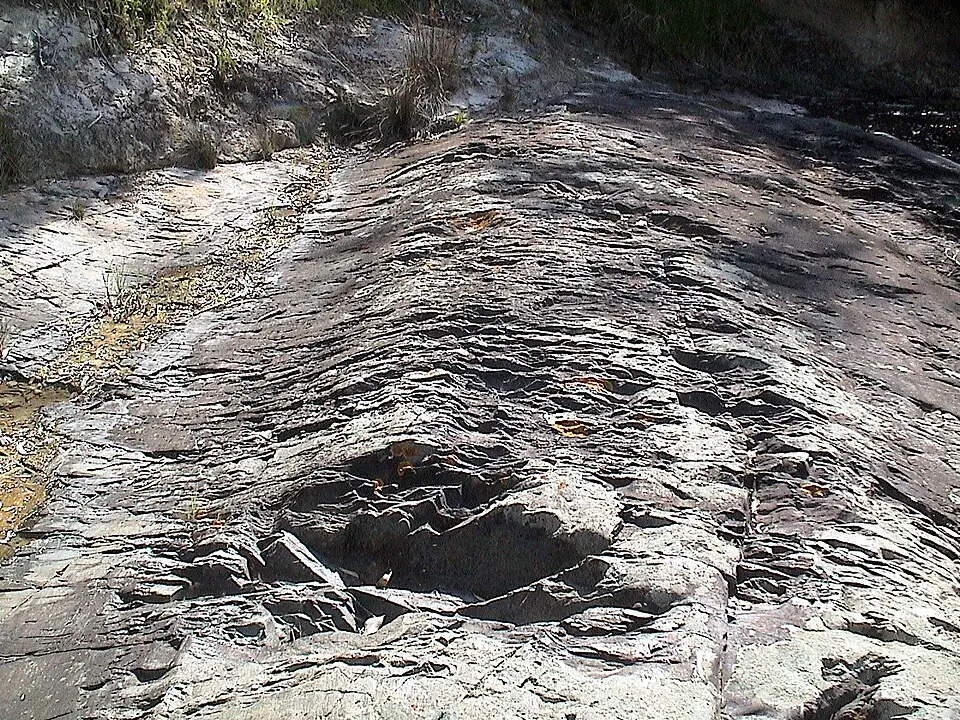
Why it matters
Between about 296 and 291 million years ago, carbon dioxide levels quadrupled, and most of the ice then retreated; Jurikova and colleagues attribute the end of the ice age's main phase to this rise. The Late Palaeozoic Ice Age lasted longer than any other since the Palaeozoic era began. It is also the last major ice age before the one the Earth is still in, with ice on Antarctica since about 34 million years ago. Most of the coal used as fuel today comes from the coal forests of this ice age.
Dating & uncertainty
Jurikova and colleagues find carbon dioxide already low more than 330 million years ago. Most of today's coal formed later, at the end of the Carboniferous and start of the Permian, the next period. For Feulner (2017), burying the plants that became this coal cut carbon dioxide sharply; Jurikova and colleagues doubt this burial explains most of its low level. They cannot yet tell whether weathering of the Variscan mountains or less carbon dioxide from volcanoes did more to keep it low. Griffis and colleagues (2023) describe successive ice sheets, separated by spells of under a million years with little or no ice. In southern Gondwana the ice was most extensive in the Carboniferous, but Jurikova and colleagues date the peak of the whole ice age to the turn of the two periods. Kent and Muttoni (2020) date the last ice, in eastern Australia, to about 260 to 255 million years ago.
Earth history as one day
22:05:481 h 54 min before midnight
if Earth’s 4.54 billion years were compressed into a single day