LIFE × EVOLUTION
The Invention of the Seed
~372 million years ago
Phanerozoic · Paleozoic · Devonian
The seed, which appeared about 372 million years ago, freed plants from the film of water that ferns and mosses need, because pollen carries the male cell on the wind and the embryo travels sealed inside a food supply.
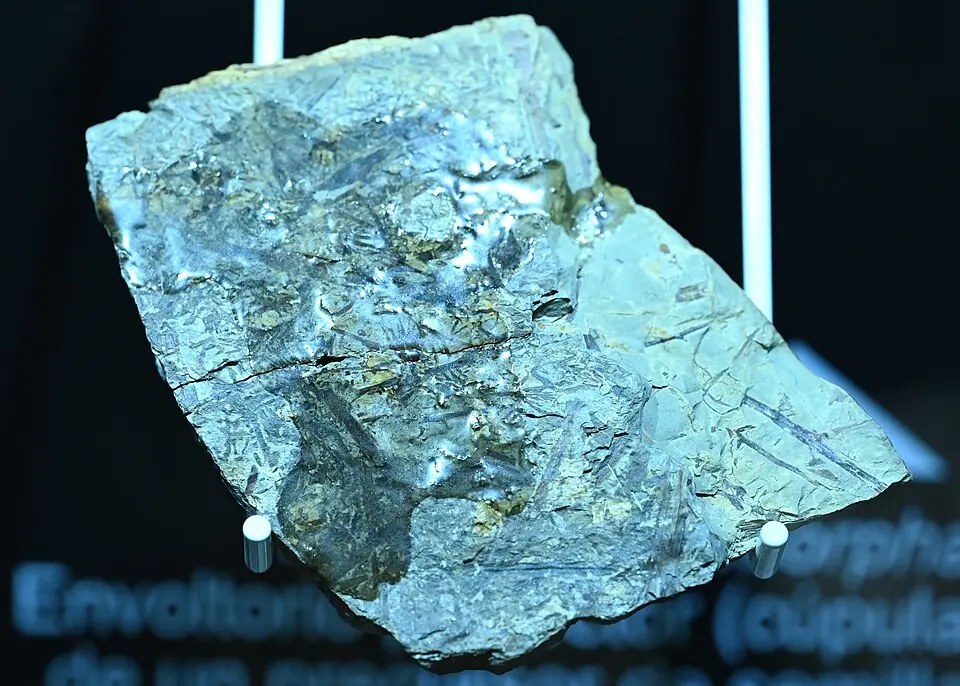
The seed is the organ in which the embryo of a plant travels, sealed inside a food supply. Ferns and mosses require a film of water that their sperm swim across. Seed plants need no such film, because pollen carries their male cell on the wind. Fossils show intermediate steps. Runcaria, a Belgian fossil 385 million years old, has an outer wrapping and an extension that apparently caught windborne pollen. It lacks an integument closed all the way round, the integument being the envelope that encloses a seed. The oldest true seeds are more than ten million years younger than Runcaria.
Why it matters
The need for water was the last constraint that kept plants on low, damp ground. Once the reproductive organ no longer depended on outside water, plants could reach deserts, uplands and high latitudes, the regions far from the equator. More than 250,000 species of seed plants exist today, and almost every familiar plant is one of them.
Dating & uncertainty
Runcaria, a fossil from Belgium dated to 385 million years ago, has almost every feature of a seed except a closed integument. Elkinsia, from the Late Devonian of West Virginia, lived about 372 million years ago and is among the oldest accepted true seeds.
Earth history as one day
22:02:001 h 58 min before midnight
if Earth’s 4.54 billion years were compressed into a single day