CLIMATE
The Quaternary Ice Ages
~2.6 million to 11,700 years ago
Phanerozoic · Cenozoic · Quaternary · Pleistocene · Gelasian
Ice sheets have grown and melted over North America and northern Europe dozens of times during the last 2.6 million years, to the rhythm of the Milankovitch cycles, slow variations in the Earth's orbit and axis.
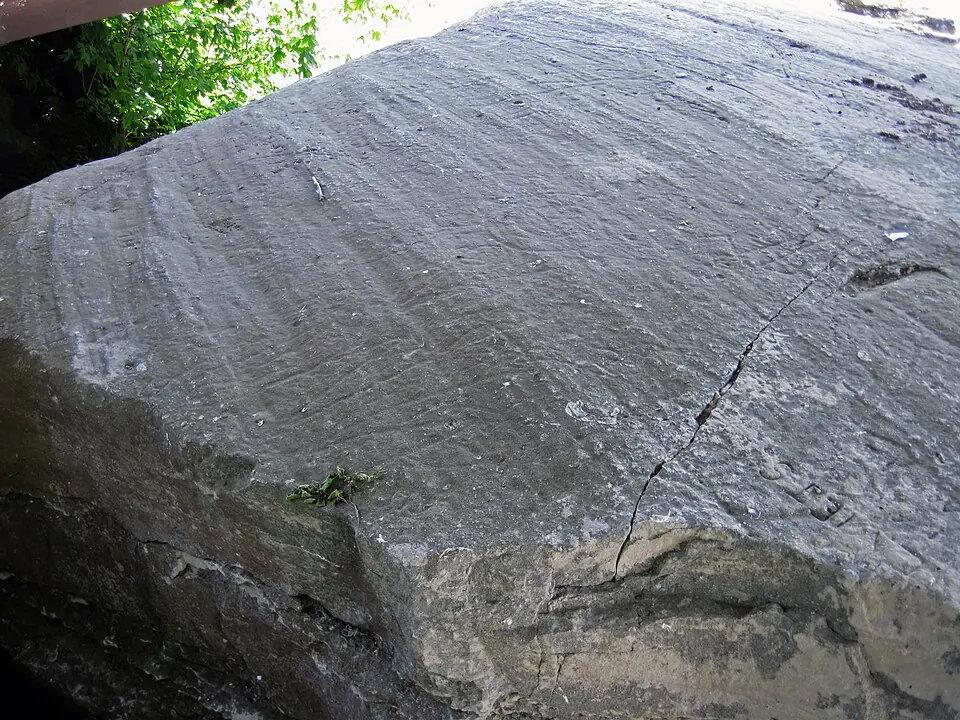
The Quaternary ice ages are the repeated growth and melting of ice sheets over North America and northern Europe, dozens of times, during the Quaternary, the most recent geological period. They follow the Milankovitch cycles, in which the shape of the Earth's orbit, the tilt of its axis and the direction that axis points vary. Together these variations change how much sunlight reaches the northern latitudes in summer. Sea level fell and rose with the ice sheets by more than a hundred metres. Ice sheets grew and melted every 41,000 years until about 900,000 years ago, and every 100,000 years thereafter. Researchers call this change of rhythm the Mid-Pleistocene Transition, and no change in the orbit accounts for it.
Why it matters
Our species evolved during the Quaternary ice ages, and every human society before the last ten millennia lived through part of them. The stable temperatures of the present, which people take for normal, belong to an interglacial, a warm interval between two advances of the ice. This interglacial is one among several dozen, and it is the only one in which agriculture has been practised.
Dating & uncertainty
The rhythm of the ice ages is well measured. Ice sheets grew and melted every 41,000 years until about 900,000 years ago, then every 100,000 years. The doubt bears on the mechanism of that change: its cause is not fully explained, and no change in the Earth's orbit accounts for it.
Earth history as one day
23:59:1049.1 s before midnight
if Earth’s 4.54 billion years were compressed into a single day