EARTH
The Great Unconformity
~720 to 539 million years ago (cause disputed)
Proterozoic · Neoproterozoic · Cryogenian
The Great Unconformity is a gap in the rock record, dated between 720 and 539 million years ago and of disputed cause, across which sandstone of the Cambrian period rests directly on rock a billion years older, as in the Grand Canyon.
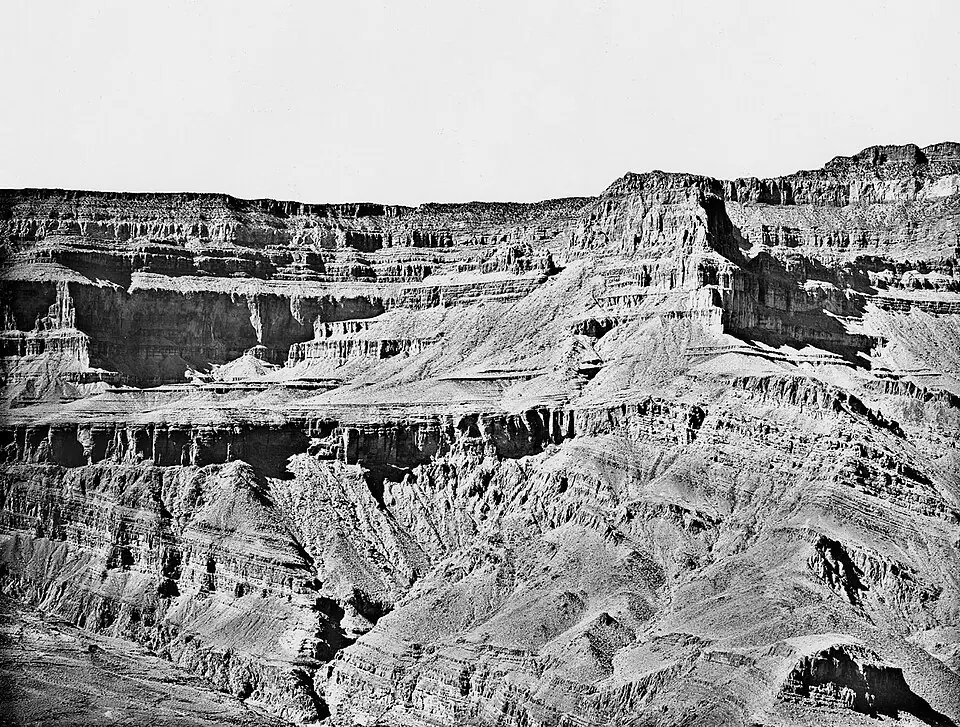
The Great Unconformity is an unconformity found on continent after continent, which is why geologists gave it a name of its own. An unconformity is a surface where rock of one age rests directly on much older rock, because erosion removed the layers deposited in between. In the Grand Canyon the surface can be touched. Sandstone of the Cambrian period lies above it. Basement rock, the older rock on which sedimentary layers rest, lies below it and is a billion years older, with nothing between the two. Where geologists have measured the erosion, it stripped away three to five kilometres of crust, and with them the rock deposited over a billion years. The cause is disputed. The principal candidates are erosion by glaciers during the snowball episodes, glaciations that covered the whole planet, and the break-up of Rodinia, a supercontinent.
Why it matters
The Great Unconformity is the largest gap in the rock record of the Earth, and it immediately precedes the appearance of animals. Its origin remains disputed. Thermochronology is a method that dates the cooling of a rock as erosion brings it towards the surface. In North America, researchers who used it attribute the cooling to glaciers that stripped the continents during the global glaciations. In North China, researchers using the same method place the deepest erosion between about 2.1 and 1.6 billion years ago, during the assembly of the first supercontinent. The question is whether the ice that nearly removed the biosphere, that is, all living things, also favoured the animals that followed.
Dating & uncertaintyDisputed
Researchers agree that the rock is missing and disagree on the cause. They have interpreted the same thermochronology in three ways. The first is stripping by glaciers in the Cryogenian, the period of the global glaciations. The second is a much older exhumation, the rise of deep rock towards the surface, linked to the assembly of the supercontinent Columbia. The third is a succession of episodes through the Neoproterozoic, the era that includes the Cryogenian, as supercontinents came together and broke apart. The authors of each interpretation have replied to the others in print.
Earth history as one day
20:11:373 h 48 min before midnight
if Earth’s 4.54 billion years were compressed into a single day