LIFE × EVOLUTION
Archaeocyaths: the First Reefs
~525 to 510 million years ago
Phanerozoic · Paleozoic · Cambrian
Archaeocyaths were cup-shaped sponges with perforated double walls that built the first reefs ever raised by animals, between 525 and 510 million years ago.
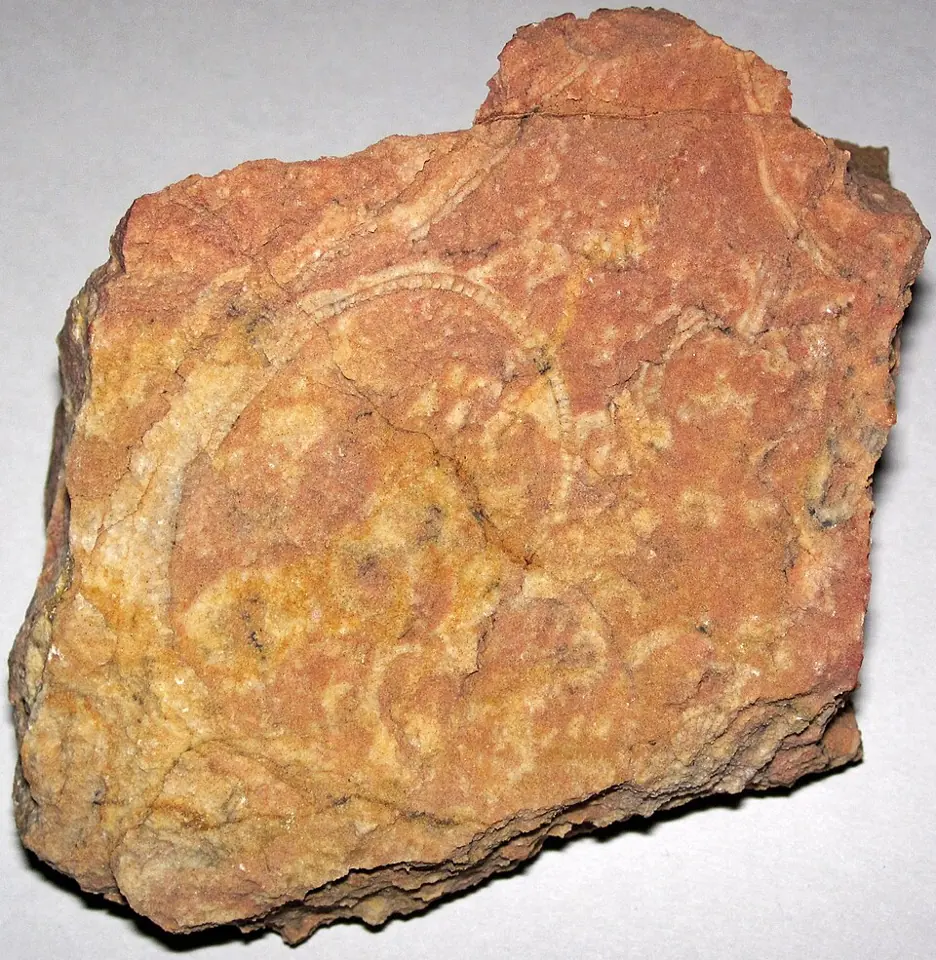
Archaeocyaths were sponges, shaped like cups with perforated double walls. They raised the first frameworks, rigid structures standing above the seafloor, that animals ever built. Manzuk and colleagues (2023) scanned branching archaeocyaths in three dimensions and compared them with living corals. The spacing and the angle of the branches indicate three things. The archaeocyaths could withstand a current and modify it. They had room for photosynthetic partners, organisms that live with them and make food from light. Reef by reef, they increased the roughness of the seabed, and a rougher seabed alters how water moves over it and what can live there.
Why it matters
A reef is a structure that creates habitats, and its carrying capacity, the amount of life it can support, grows with its roughness. Archaeocyath reefs were the first that animals built. Some fifteen million years after they appeared, these reefs collapsed, and the abundance of animals with shells fell with them. This was the first time that a reef collapse had that effect.
Dating & uncertainty
Archaeocyaths appear early in Cambrian Series 2, the second division of the Cambrian, and are gone before its end. In Nevada, a negative carbon isotope excursion, a temporary fall in the share of heavy carbon, marks their disappearance. But reef sections, successions of rock layers, on different continents are only loosely correlated, that is, matched by age, so the collapse need not have been simultaneous.
Earth history as one day
21:13:282 h 47 min before midnight
if Earth’s 4.54 billion years were compressed into a single day