LIFE × CLIMATE
Coccolithophores and the Chalk
~100 to 66 million years ago
Phanerozoic · Mesozoic · Cretaceous
Coccolithophores, single-celled algae covered with plates of the mineral calcite, became so numerous between 100 and 66 million years ago that their remains formed the chalk, including the white cliffs of northern Europe.
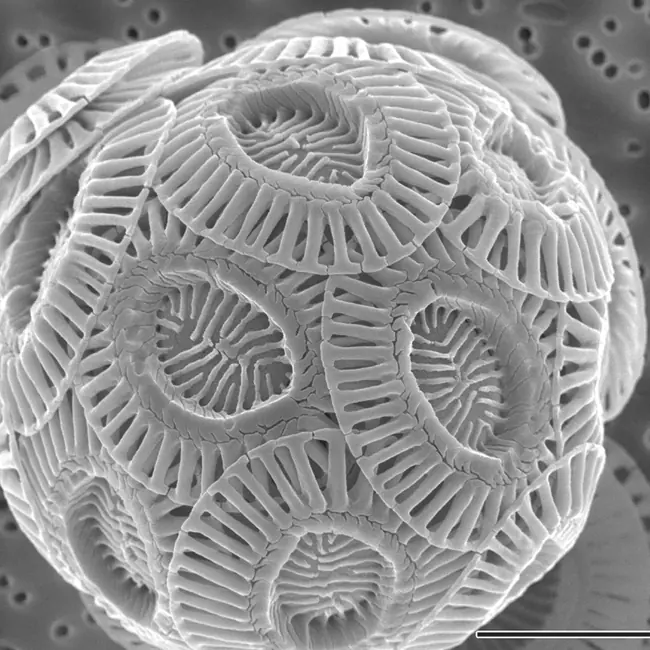
Coccolithophores are single-celled algae of the plankton, the organisms that drift in the sea. Each cell builds a covering of plates called coccoliths, made of calcite, a mineral of calcium carbonate. Coccoliths have been settling onto the deep sea floor since the Jurassic. In the Cretaceous, the following period, coccolithophores became numerous enough for their coccoliths to form a rock, the chalk. The white cliffs of northern Europe, and comparable beds of rock on three continents, are coccoliths that accumulated over tens of millions of years.
Why it matters
Each coccolith that settles removes carbon from surface waters and immobilises it in the sea floor. The sea floor eventually descends into the mantle, the layer of the Earth beneath the crust, and takes the carbon with it. Over the last hundred million years, coccolithophores have been the planet's principal long-term carbon sink, that is, the main process that removes carbon and stores it durably. What becomes of coccolithophores in a changing ocean therefore concerns the whole planet.
Dating & uncertainty
Coccolithophores appear in the Jurassic, and thick chalk accumulates mainly between 100 and 66 million years ago. The chalk itself is a deposit of deep water. Researchers earlier represented these algae as living only in the open ocean. Püttmann and colleagues (2021) revise that view: they identify rich assemblages of coccolithophores, the sets of species found together, in nearshore sediments deposited under forty metres of water.
Earth history as one day
23:28:1631 min 43 s before midnight
if Earth’s 4.54 billion years were compressed into a single day