LIFE × EVOLUTION
Reptiles Return to the Sea
~250 to 242 million years ago
Phanerozoic · Mesozoic · Triassic
Land reptiles returned to the sea for good between 250 and 242 million years ago, and within a few million years their limbs had become paddles and their bones light and spongy.
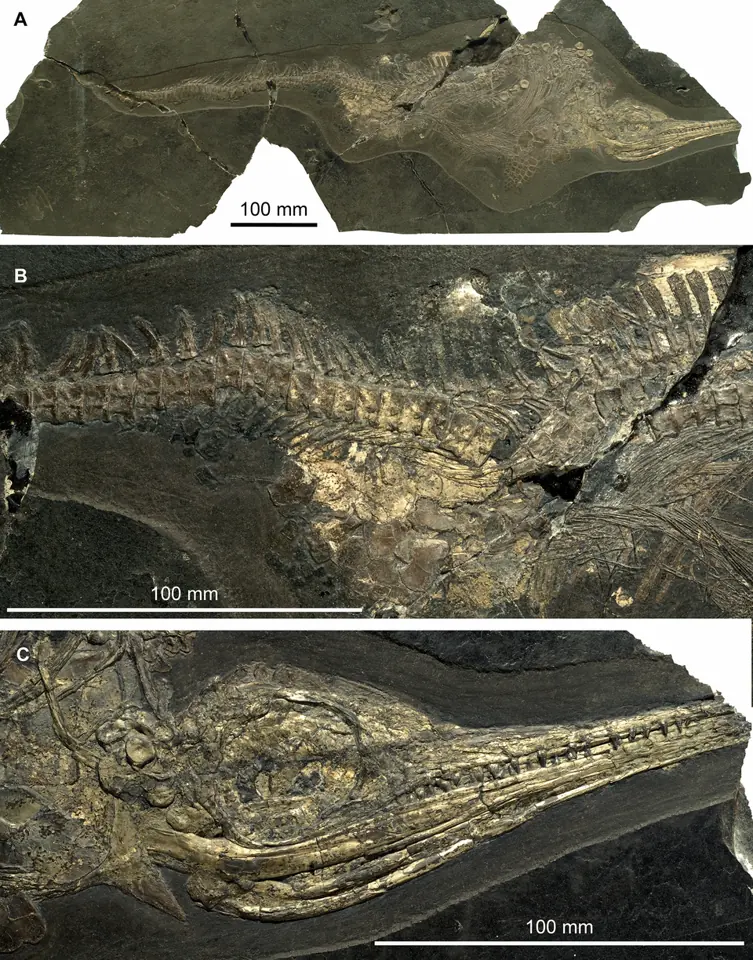
Marine reptiles descend from land reptiles that returned to the sea and remained there. Within a few million years their limbs had become paddles. Their bones had become spongy and light, which reduces weight without loss of strength. Spongy bone is a general mark of secondary aquatic life, the life in water of animals whose ancestors lived on land. Some of these reptiles had grown large enough to prey on one another. The oldest reptiles that lived fully in open water come from Spitsbergen. They are about two million years younger than the end-Permian extinction, the most severe extinction in the record. That gap is short enough for researchers to regard them as survivors of the extinction, not as latecomers that occupied an emptied sea.
Why it matters
Air-breathing animals have returned to the sea on many occasions. The reptiles' return to the sea is the first to occur on a large scale. Cetaceans, the whales and dolphins, and sea turtles made the same return, under the same constraints and with largely identical solutions. The transition of the reptiles was fast. The descendants of walking reptiles were living in open water, far from the coast, while the sea was still recovering from the end-Permian extinction.
Dating & uncertainty
Before the Spitsbergen fossils were discovered, the oldest well-dated remains of marine reptiles were Chinese and 248.8 million years old. The Spitsbergen fossils are older: they date from about 250 million years ago, some two million years after the end-Permian extinction. The two dates lead to two readings of the first marine reptiles. At 248.8 million years ago, the reptiles appear as beneficiaries of a sea emptied by the extinction. At 250 million years ago, they appear as animals that lived through the extinction. On either reading, the transition from land animal to marine animal is remarkably rapid.
Earth history as one day
22:40:421 h 19 min before midnight
if Earth’s 4.54 billion years were compressed into a single day