TECHNOLOGY
The Discovery of Penicillin
1928 to 1945 CE
Phanerozoic · Cenozoic · Quaternary · Holocene · Meghalayan
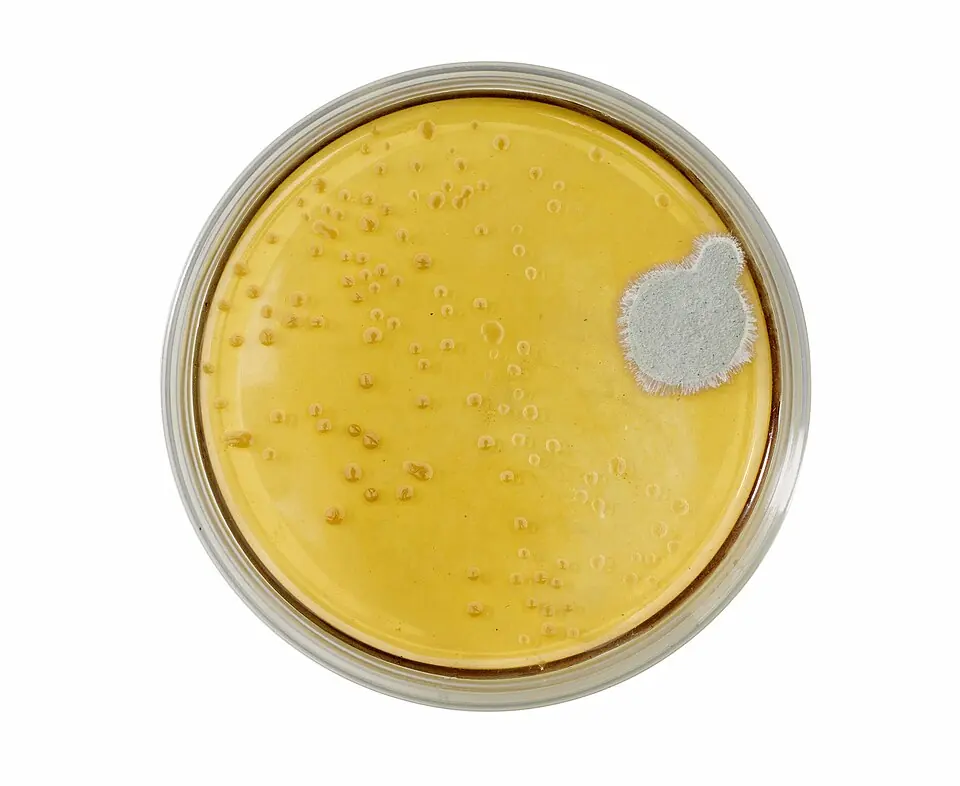
Penicillin was discovered in 1928 on an uncovered culture plate, where bacteria dissolved around a spot of mould, and it took another decade, a second laboratory and a wartime industrial effort to make it a medicine.
Penicillin is an antibiotic, a medicine that acts against bacteria, and it is produced by a mould. Its discovery began with a culture plate, a dish on which bacteria are grown, that had been left uncovered: the bacteria were dissolving in a ring around a spot of mould. Turning that observation into a medicine took another decade, a second laboratory and a wartime industrial effort. The decisive step was deep-tank fermentation, which grows the mould in large aerated vessels instead of on surfaces and raised yields by orders of magnitude. By 1945 penicillin was being produced by the ton, and infections that had reliably killed ceased to do so.
Why it matters
Life expectancy rose, and the bacteria evolved almost at once: bacteria resistant to penicillin were reported while the drug was still new. This resistance is natural selection, the survival of the individuals best suited to their conditions, directly observable and still under way. Every course of antibiotics is an episode of it.
Dating & uncertainty
The observation of the plate dates from 1928 and the paper that reports it from 1929, well before penicillin reached patients in quantity. Resistant bacteria were reported before the war ended.
Earth history as one day
23:59:59.99811.9 ms before midnight
if Earth’s 4.54 billion years were compressed into a single day