EARTH × TECHNOLOGY
The Age of the Earth
1956 CE
Phanerozoic · Cenozoic · Quaternary · Holocene · Meghalayan
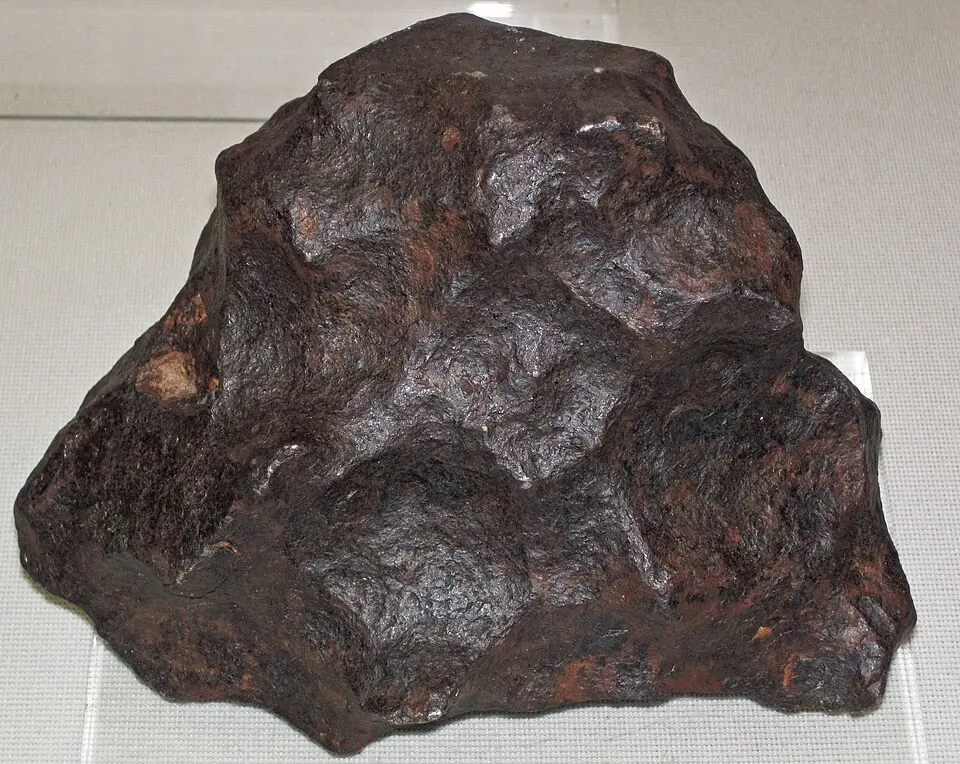
Clair Patterson obtained 4.55 billion years for the age of the Earth in 1956, by measuring the lead in meteorites and in deep-ocean sediment.
Clair Patterson obtained 4.55 billion years for the age of the Earth from the lead in meteorites and in deep-ocean sediment. The sediment was taken to contain the average lead of the planet. Patterson measured lead isotopes, atoms of lead that differ in mass. His method is the lead-lead isochron. Two uranium isotopes decay, each turning into a different lead isotope at its own rate. Samples of a common age, plotted on a graph of their lead isotopes, therefore fall on a single line, the isochron. The slope of that line gives the age, with no need to know the lead composition the samples started with. A clean measurement first required removing the lead that leaded petrol had spread over everything, Patterson’s own laboratory included. That work led him to spend the rest of his career opposing the fuel industry.
Why it matters
Patterson's measurement is the left edge of this timeline and sets its scale. Seventy years of refinement have moved the value by less than one per cent. The age of the Earth could be obtained only after the lead spread everywhere by industry had been subtracted from the measurement.
Dating & uncertainty
The value of 4.55 billion years is an age for meteorites. It is applied to the Earth on the argument that both formed from the same material at the same moment. Later work has examined that assumption, and also the time the assembly of the Earth itself required.
Earth history as one day
23:59:59.99871.3 ms before midnight
if Earth’s 4.54 billion years were compressed into a single day